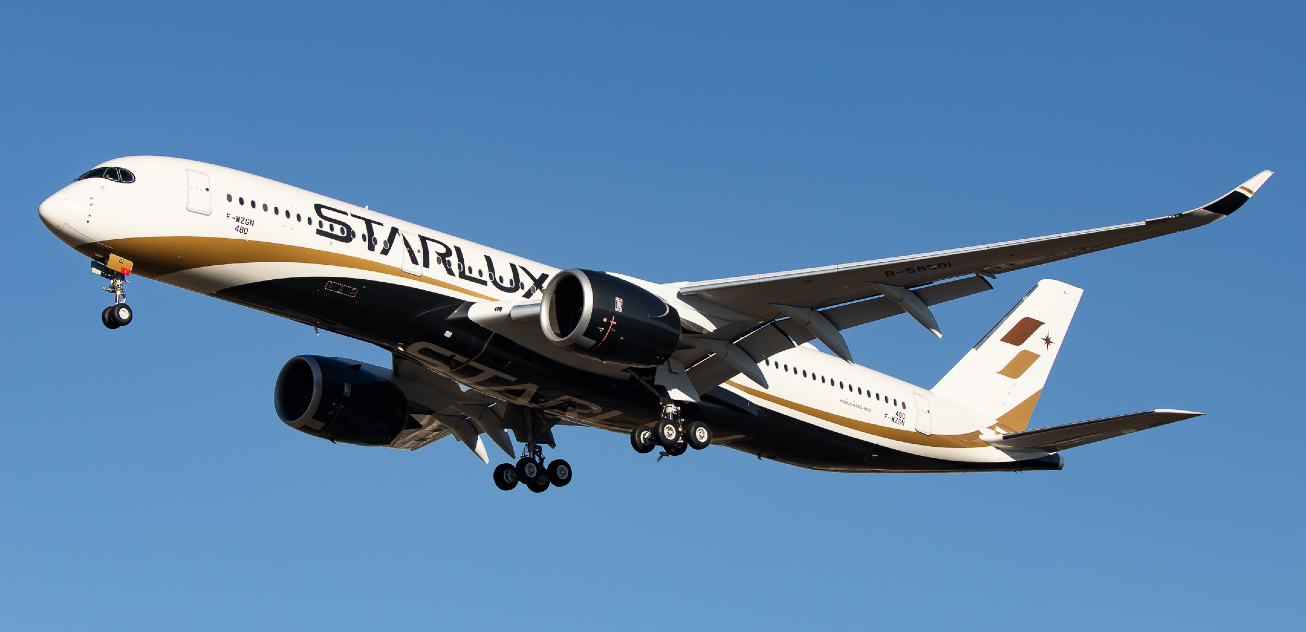
Taiwan’s premium airline Starlux Airlines is taking a significant step in its international expansion strategy. The airline has announced its first direct route to Europe, connecting Taipei with Prague. The new service marks an important milestone for the rapidly growing carrier and highlights the increasing connectivity between East Asia and Central Europe.
The launch of the Taipei–Prague route also reflects broader developments in global aviation. As international travel recovers and trade relationships deepen, airlines are exploring new long-haul connections that link emerging travel markets with major economic regions.
Starlux Airlines’ Premium Growth Strategy
Founded by former EVA Air chairman Chang Kuo-wei, Starlux Airlines has positioned itself as a premium airline focused on service quality, modern aircraft, and high-end passenger experiences. Since its launch in 2020, the airline has steadily expanded its network across Asia and North America.
The move into Europe represents the next stage of the airline’s long-term growth strategy. By connecting Taiwan with key European destinations, Starlux aims to capture demand from both business travelers and leisure passengers seeking high-quality long-haul services.
Why Prague?
The choice of Prague as Starlux’s first European destination is strategically significant. The Czech capital has developed into an increasingly important hub for tourism, technology, and international business in Central Europe.
Prague also benefits from its geographical position within the European Union, providing access to neighboring markets such as Germany, Austria, Poland, and Slovakia.
For airlines expanding internationally, such locations can serve as effective gateways to broader regional markets. Companies exploring European expansion often analyze similar strategic considerations in developing a market entry strategy.
Strengthening Taiwan–Europe Connectivity
The new Taipei–Prague route is part of a broader trend of increasing connectivity between East Asia and Europe. Trade, tourism, and cultural exchange between the regions have grown significantly in recent decades.
Taiwan plays an important role in global supply chains, particularly in high-tech manufacturing and semiconductor production. Improved air connectivity therefore supports not only tourism but also business travel and economic cooperation.
NeoMarketWays regularly analyzes such global economic and trade developments in its section on Global Markets.
Opportunities for Tourism and Business Travel
The new route is expected to benefit both tourism and business travel. Taiwan has become an increasingly attractive destination for European travelers interested in Asian culture, cuisine, and technology-driven urban environments.
At the same time, the route may encourage Taiwanese tourists and entrepreneurs to explore Central Europe. Cities such as Prague are known for their cultural heritage, growing technology sectors, and strong tourism infrastructure.
Improved connectivity between the regions may therefore stimulate economic exchange and new business opportunities.
The Competitive Landscape in Long-Haul Aviation
The expansion of Starlux into Europe also reflects the increasingly competitive nature of global aviation. Airlines are investing heavily in modern aircraft, premium cabin experiences, and differentiated service concepts.
Starlux’s fleet of Airbus A350 and A330neo aircraft allows the airline to operate long-haul routes with high levels of passenger comfort and fuel efficiency.
By combining modern aircraft with a strong premium brand identity, Starlux aims to position itself among Asia’s leading full-service airlines.
Implications for International Business
New long-haul connections often have broader economic implications. Direct flights can strengthen trade relationships, facilitate business travel, and support investment flows between regions.
Companies evaluating international expansion opportunities frequently consider transportation infrastructure and connectivity as key factors in market entry decisions.
NeoMarketWays explores these strategic considerations in its analysis of international expansion strategies.
Conclusion
The launch of Starlux Airlines’ first European route marks an important milestone in the airline’s development and highlights the growing connections between Taiwan and Europe.
By choosing Prague as its entry point into the European market, Starlux demonstrates a strategic approach to long-haul expansion that combines tourism potential with business connectivity.
For international companies and travelers alike, improved air connections between East Asia and Europe will continue to shape economic and cultural exchange in the coming years.
NeoMarketWays provides insights into global markets, international expansion strategies, and emerging business opportunities. Explore our sections on Market Entry, Business Strategy, and Global Markets to learn more about international developments.