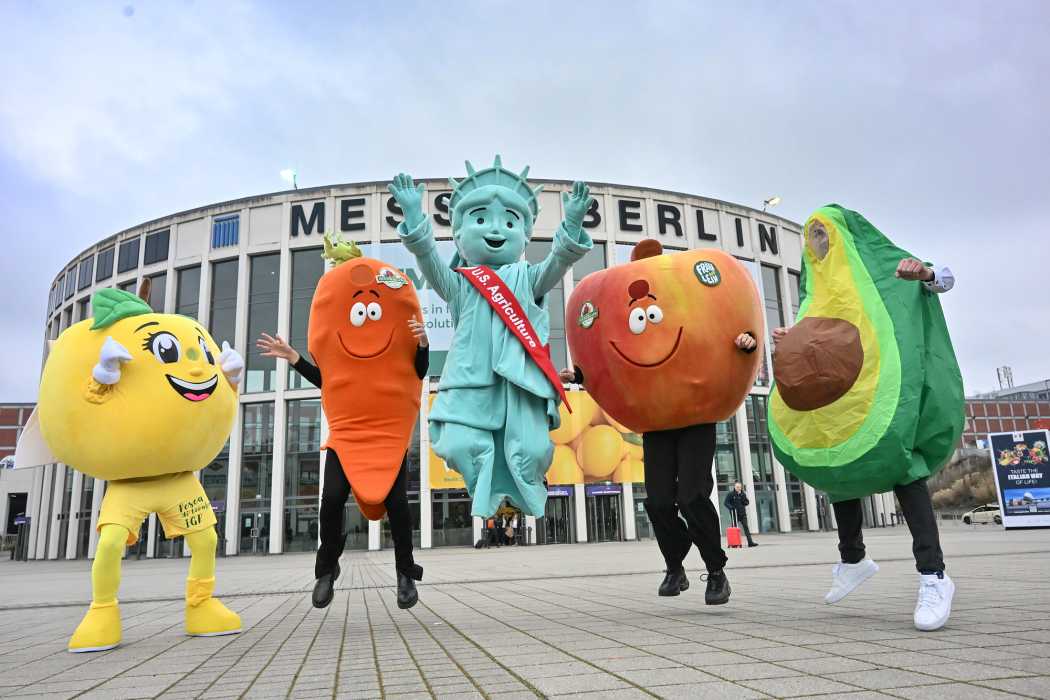
By any meaningful measure, Fruit Logistica has become far more than an industry gathering. Hosted annually in Berlin, the event has evolved into one of the most influential platforms shaping how fresh produce is grown, traded, distributed, and consumed across Europe and increasingly, how global suppliers position themselves for entry into the European market.
With exhibitors and visitors from more than 130 countries, Fruit Logistica sits at the intersection of agriculture, logistics, retail strategy, and geopolitics. For producers and exporters from Asia, Latin America, and Africa, the fair is often the first serious encounter with Europe’s highly structured and highly regulated food market.
A Marketplace Where Global Supply Meets European Demand
Europe remains one of the world’s most attractive fresh produce markets. High purchasing power, sophisticated retail systems, and growing consumer interest in quality, sustainability, and traceability continue to drive demand. Yet these same characteristics also make Europe one of the most complex regions to enter.
Fruit Logistica reflects this dual reality. On the surface, the fair is a showcase of fruits, vegetables, packaging solutions, and logistics services. Beneath that, it functions as a strategic marketplace where exporters test demand, retailers scout suppliers, and service providers position themselves within increasingly fragile global supply chains.
Unlike many trade fairs that focus narrowly on product display, Fruit Logistica covers the entire value chain from seeds and cultivation technologies to cold-chain logistics, certification, and private-label strategies. This breadth explains why decision-makers attend not only to buy and sell, but to understand where the market is heading.
Why Berlin Matters
Berlin’s role is not incidental. As a politically connected, internationally accessible European capital, it provides neutral ground for global trade discussions. For companies outside Europe, especially from Asia, Berlin offers proximity to regulators, industry associations, and some of Europe’s most influential retail and wholesale groups.
More importantly, the fair reflects how Europe does business: structured, relationship-driven, and risk-conscious. Deals are rarely closed on the spot. Instead, Fruit Logistica serves as the opening move in a longer process of evaluation, trust-building, and alignment with European standards.
Asian Companies and the European Opportunity
Asian exporters are among the most visible international participants at Fruit Logistica. From tropical fruits and vegetables to processed and value-added products, many arrive with ambitious growth targets for Europe. Yet the gap between interest and execution remains wide.
European buyers expect more than competitive pricing. They look for reliability, compliance with food safety and sustainability standards, and partners who understand local market dynamics. Fruit Logistica makes these expectations explicit often within the first few conversations.
For many Asian companies, the fair is a reality check. Products may be well received, but questions quickly arise: Which European country should be entered first? Is retail the right channel, or is a B2B approach more realistic? Should distribution be handled locally, or through a regional partner? These are strategic questions that extend well beyond the exhibition halls.
From Visibility to Market Entry
One of Fruit Logistica’s defining characteristics is that visibility alone is no longer enough. In previous decades, a strong booth and a compelling product story could generate sufficient momentum. Today, European markets demand structure.
Successful exhibitors increasingly arrive with clear market entry strategies. They know which countries they are targeting, which certifications are required, and which distribution models align with their capabilities. They also understand that follow up often months after the fair is where real value is created.
This shift reflects a broader transformation in global trade. As supply chains become more regionalized and regulatory scrutiny increases, market entry is less about speed and more about resilience. Fruit Logistica mirrors this evolution, functioning as both a trade fair and an informal assessment center for long-term market readiness.
Europe Is Not a Single Market
One of the most persistent misconceptions among new entrants is the idea of Europe as a single, unified market. While the European Union provides a regulatory framework, consumer behavior, retail structures, and business culture vary significantly between countries.
Fruit Logistica makes these differences visible. Conversations with buyers from across Europe quickly reveal diverging expectations regarding pricing, packaging, sustainability claims, and logistics. Companies that recognize and address these nuances early gain a decisive competitive advantage.
As a result, local networks distributors, industry associations, chambers of commerce, and institutional stakeholders play an increasingly important role. Building these connections often determines whether initial interest translates into lasting market presence.
A Strategic Starting Point
Seen through a strategic lens, Fruit Logistica is best understood as a starting point rather than a conclusion. It is where market ambitions are tested, assumptions challenged, and partnerships initiated. The companies that succeed are those that treat the fair as part of a broader market entry process one that continues long after the exhibition lights are switched off.
In an era marked by supply chain disruptions, geopolitical uncertainty, and shifting consumer expectations, Fruit Logistica remains a rare constant. It offers a structured environment where global players can engage with Europe’s fresh produce ecosystem on equal footing.
For international companies particularly those from Asia Berlin is where European market entry begins to move from concept to strategy. And in today’s competitive landscape, that distinction matters more than ever.
Expansion and Concept Strategies. Opportunities with Risk
At the same time, such expansion and concept initiatives are not without risk. Internationalisation requires not only capital, but also thorough market analysis, adaptation to local conditions,
robust distribution and logistics set-ups, and a high level of cultural sensitivity. An overly standardised approach can easily fail in diverse, heterogeneous markets.
Without strong local partners, in-depth market knowledge and a clear strategy, there is a real danger that a concept will miss the needs of the target audience whether through an unsuitable product range, ineffective marketing or inefficient distribution structures.