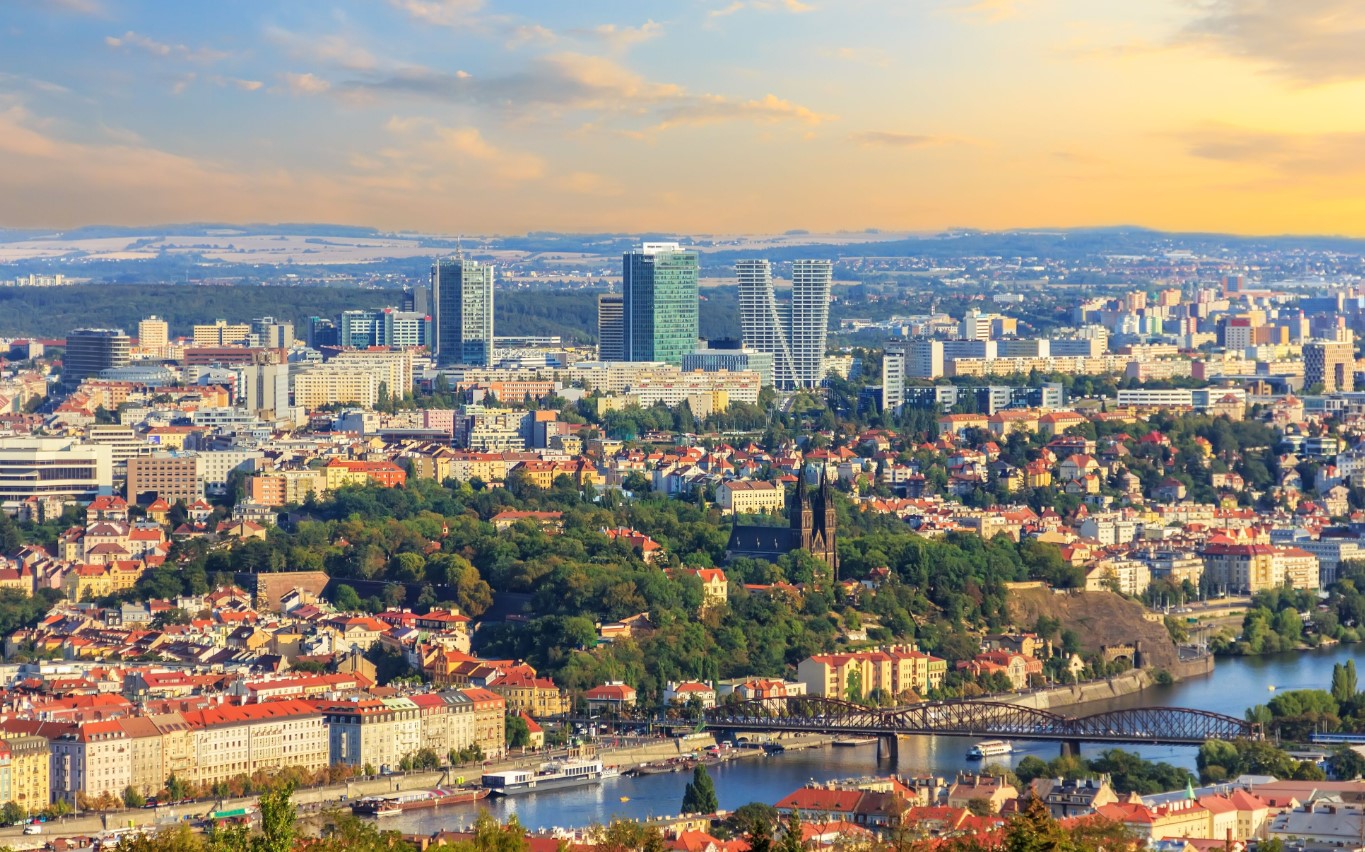
For much of the past two decades, international expansion strategies in Europe followed a relatively predictable geography. Western Europe represented stability, purchasing power and institutional reliability, while Eastern Europe was often perceived primarily as an extended manufacturing platform for international industry. Today, however, that perception is changing rapidly. From Poland to Romania and from the Czech Republic to the Baltic states, Eastern Europe is increasingly emerging as one of the continent’s most strategically important regions for international business development, industrial investment and cross-border expansion.
What was once considered a low-cost production corridor is now evolving into a highly dynamic economic landscape shaped by advanced manufacturing, technology development, logistics infrastructure and growing regional innovation ecosystems. As global supply chains become more fragmented and geopolitical uncertainties continue to reshape international trade patterns, companies across Europe and Asia are reassessing how and where they expand.
In response, a growing number of executives are turning toward so-called “Market Entry Journeys” immersive business exploration programs designed to understand regional ecosystems before committing serious investment or launching long-term operations.
“In today’s environment, companies can no longer afford to expand based solely on PowerPoint presentations, spreadsheets and remote market analysis. Understanding a market increasingly requires direct exposure to local realities.”
The rise of Market Entry Journeys reflects a broader realization among international firms: successful expansion into Eastern Europe depends not only on macroeconomic indicators, but on local relationships, regional understanding and strategic observation. Executives exploring the region frequently discover that business culture, administrative structures, labor market dynamics and supplier ecosystems vary significantly between countries and even between regions within the same country.
Poland. Eastern Europe’s Industrial and Logistics Powerhouse
Among all Eastern European markets, Poland has arguably become the region’s most important strategic gateway. With its large domestic market, strong industrial base and central geographic position, the country increasingly functions as a bridge between Western Europe and the emerging economies further east. Cities such as Warsaw, Wrocław, Katowice and Gdańsk have developed into major centers for logistics, automotive manufacturing, technology services and industrial production.
International companies entering Poland quickly recognize that the country offers more than competitive labor costs. Poland provides direct access to the European Union market, rapidly improving infrastructure and a growing pool of highly qualified engineers and technical specialists. In sectors such as advanced manufacturing, warehousing, mobility, electronics and green technologies, the country has become one of Europe’s most attractive destinations for nearshoring and industrial relocation.

Yet successful market entry into Poland often requires a strong understanding of regional business culture and local partnership networks. Many foreign companies initially underestimate the importance of relationship-building and regional decision-making structures.
This is precisely why Market Entry Journeys have become increasingly valuable. By visiting industrial clusters, meeting logistics providers, exploring special economic zones and speaking directly with local stakeholders, executives gain insights that are rarely visible through traditional market research alone.
Romania. The Emerging Technology and Engineering Hub
Romania is experiencing a particularly remarkable transformation. Long perceived primarily as a low-cost outsourcing destination, the country is increasingly positioning itself as a sophisticated technology and engineering hub within Eastern Europe. Bucharest, Cluj-Napoca and Timișoara are attracting growing international attention due to their expanding IT sectors, engineering talent and rapidly developing innovation ecosystems.
For international firms, Romania offers an attractive combination of technical expertise, competitive operational costs and increasing digital capabilities. Technology companies exploring the Romanian market frequently discover a highly skilled workforce with strong capabilities in software engineering, cybersecurity, industrial automation and digital services. At the same time, infrastructure development and foreign investment continue to improve the country’s broader economic attractiveness.
However, executives entering Romania also recognize that successful market entry requires patience and local understanding. Administrative procedures, regional business practices and market expectations can differ considerably from Western European norms.
Companies that rely exclusively on remote communication often struggle to build the trust necessary for long-term cooperation. Through Market Entry Journeys, international decision-makers are able to establish direct relationships with local entrepreneurs, universities, business associations and regional authorities connections that frequently become critical for sustainable market expansion.
The Czech Republic. Precision, Industry and Strategic Stability
The Czech Republic continues to occupy a unique position within Eastern Europe’s industrial landscape. With its strong manufacturing tradition, advanced engineering capabilities and close integration into German and Western European supply chains, the country remains one of the region’s most strategically stable and industrially sophisticated markets.
Prague, Brno and Ostrava have become important centers for automotive production, precision engineering, industrial automation and high-value manufacturing. International companies often view the Czech Republic as an ideal entry point for expansion into Central and Eastern Europe due to its relatively predictable regulatory environment, highly qualified industrial workforce and strong export-oriented economy.
Nevertheless, even in a comparatively mature market such as the Czech Republic, local presence remains essential. Executives familiar with Western Europe sometimes assume that digital communication and international management structures are sufficient to establish successful operations. In reality, regional supplier relationships, personal trust and long-term cooperation remain highly important, particularly within industrial sectors.
Modern Market Entry Journeys therefore function less as ceremonial business trips and more as strategic reconnaissance missions. Participants meet municipal officials, industrial park operators, local manufacturers, chambers of commerce, logistics providers and potential business partners often within only a few days.
The objective is not immediate deal-making, but pattern recognition: understanding how business ecosystems actually function on the ground.
The Return of Strategic Business Travel
In many ways, the growing importance of Market Entry Journeys reflects the return of strategic business travel in a more uncertain global economy. Rather than rushing into expansion through standardized internationalization models, companies are becoming more cautious, but also more curious. Executives increasingly prefer exploratory engagement before committing significant resources. They seek to understand labor market realities, regional investment incentives, infrastructure quality and local decision-making cultures through direct observation rather than abstract reporting.
This approach is particularly important in Eastern Europe, where business relationships often remain highly relationship-driven. Trade fairs, regional business associations, industrial clusters and local chambers of commerce continue to play a central role in market access. Trust is frequently established gradually through repeated interaction, local introductions and physical presence, not merely through virtual meetings or remote negotiations.

Ultimately, the growing popularity of Market Entry Journeys demonstrates a deeper shift in international business strategy. Companies increasingly recognize that successful expansion is not simply about entering a market quickly; it is about understanding a market intelligently. In Eastern Europe, perhaps more than anywhere else in Europe today, the most valuable business intelligence is rarely found in a consultancy report. It is found in conversations, factory visits, regional networks and the subtle economic realities that only become visible once companies step directly into the market themselves.
Explore Eastern Europe Through NeoMarketWays Market Entry Journeys
Expanding into Eastern Europe requires more than market reports and remote research. Successful international growth depends on local understanding, trusted networks and direct exposure to regional business ecosystems.
NeoMarketWays Market Entry Journeys are designed to help executives, investors and international companies explore emerging opportunities across Poland, Romania, the Czech Republic and other dynamic European markets through curated business exploration programs.
Participants gain direct access to industrial clusters, innovation hubs, trade fairs, regional stakeholders, business associations and potential strategic partners — creating valuable market intelligence before making long-term investment decisions.
Whether your company is evaluating manufacturing opportunities, exploring nearshoring strategies, building distribution networks or identifying local partners, NeoMarketWays provides tailored Market Entry Journeys designed around your industry and strategic objectives.
- Discover markets before entering them.
- Build relationships before making investments
- Understand regional ecosystems before scaling internationally.
Learn More About NeoMarketWays Market Entry Journeys