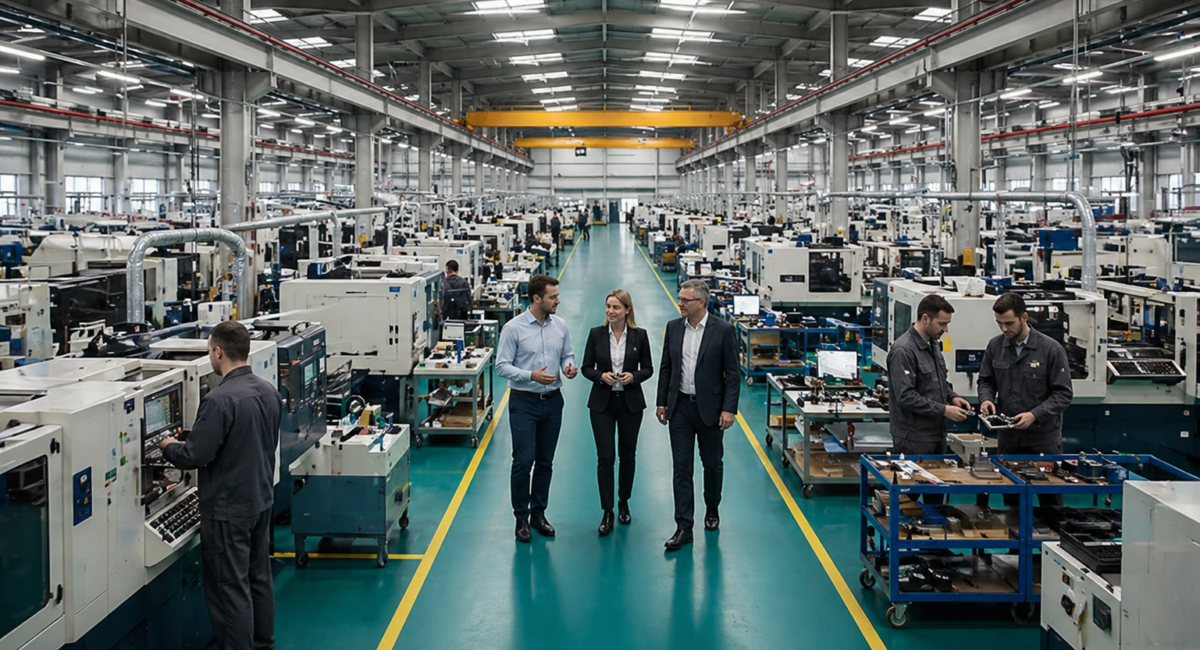
As global supply chains undergo structural transformation, Europe is re-emerging as a strategic manufacturing destination. For OEM companies and industrial investors, the question is no longer whether to expand into Europe, but where and how.
Introduction: Europe’s Manufacturing Renaissance
Over the past decade, Europe has repositioned itself as a critical hub for advanced manufacturing. Driven by geopolitical shifts, supply chain disruptions, and the push for resilience, companies are increasingly reassessing their global production footprints.
For OEM manufacturers particularly those in automotive, electronics, and machinery the European market offers a compelling combination of stability, access to high-value customers, and integration into one of the world’s largest economic zones.
However, Europe is not a homogeneous market. Cost structures, labor availability, regulatory frameworks, and industrial ecosystems vary significantly between countries. This makes location strategy a decisive factor in long-term success.
This analysis focuses on four key manufacturing destinations: Poland, the Czech Republic, Germany, and Hungary each offering distinct advantages and trade-offs.
Germany: Industrial Powerhouse with Premium Costs
Germany remains Europe’s manufacturing backbone. As the continent’s largest economy, it offers unmatched industrial infrastructure, engineering expertise, and proximity to major OEMs.
Strengths
- World-class industrial ecosystem and supply chains
- Highly skilled workforce and strong vocational training system
- Access to premium customers and innovation networks
Cost Structure
Germany is also the most expensive of the four markets. Average manufacturing wages are significantly higher than in Central and Eastern Europe, and energy costs—despite recent stabilization remain elevated compared to regional peers.
Strategic Role
Germany is best suited for high-value production, R&D-intensive manufacturing, and headquarters functions. Many OEMs adopt a dual strategy: maintaining core operations in Germany while relocating cost-sensitive production to neighboring countries.
Poland: Scale, Flexibility and Competitive Costs
Poland has emerged as one of Europe’s most attractive manufacturing locations. With a large domestic market and a growing industrial base, it offers a compelling balance between cost and capability.
Strengths
- Competitive labor costs with a large workforce
- Strong logistics infrastructure and access to Western Europe
- Dynamic industrial regions such as Silesia
Cost Structure
Labor costs in Poland remain significantly lower than in Western Europe, while productivity levels continue to rise. Energy costs are moderate, although still influenced by the country’s energy transition.
Strategic Role
Poland is particularly attractive for large-scale production and assembly operations. OEM suppliers benefit from the country’s integration into European supply chains, especially in automotive and electronics.
Czech Republic: High Productivity and Industrial Depth
The Czech Republic stands out for its strong industrial tradition and high productivity levels. Despite its relatively small size, it is one of the most industrialized economies in Europe.
Strengths
- Highly skilled workforce with strong engineering capabilities
- Deep integration into automotive and machinery sectors
- Central location with excellent connectivity
Cost Structure
Labor costs are higher than in Poland and Hungary but remain competitive compared to Germany. Productivity, however, is among the highest in the region, often offsetting wage differences.
Strategic Role
The Czech Republic is ideal for precision manufacturing, high-quality production, and supplier integration within complex industrial ecosystems. It is particularly attractive for OEMs requiring reliability and technical expertise.
Hungary: Incentive-Driven Growth and Strategic Positioning
Hungary has positioned itself as a proactive destination for manufacturing investment, particularly in the automotive and electronics sectors.
Strengths
- Attractive government incentives and tax policies
- Strong presence of international OEMs
- Growing role in electric vehicle and battery production
Cost Structure
Hungary offers competitive labor costs and relatively favorable tax conditions. Energy costs are generally aligned with regional averages, though subject to external volatility.
Strategic Role
Hungary is well-suited for companies seeking incentive-driven expansion and integration into emerging sectors such as e-mobility and battery manufacturing.
Comparative Analysis: Cost vs Capability
When comparing these four markets, a clear pattern emerges: there is no single “best” location—only the best fit for a company’s strategic priorities.
- Germany: High cost, high capability – ideal for innovation and premium manufacturing
- Poland: Low to mid cost, scalable – ideal for volume production
- Czech Republic: Mid cost, high productivity – ideal for precision manufacturing
- Hungary: Competitive cost with incentives – ideal for strategic investments
OEM companies increasingly adopt multi-country strategies, combining strengths across locations to optimize cost, quality, and resilience.
Key Decision Factors for OEMs
Labor Availability and Skills
Access to skilled labor remains one of the most critical factors. While Germany offers top-tier expertise, labor shortages are becoming a growing concern. In contrast, Poland and Hungary provide larger labor pools, though competition for talent is increasing.
Energy Costs and Sustainability
Energy pricing is a decisive factor, particularly for energy-intensive industries. Companies must also consider long-term sustainability goals, as EU regulations increasingly favor low-carbon production.
Incentives and Government Support
Central and Eastern European countries offer a range of incentives, including tax breaks, grants, and infrastructure support. Hungary, in particular, has been aggressive in attracting foreign direct investment.
Supply Chain Integration
Proximity to suppliers and customers is essential. The Czech Republic and Poland benefit from strong integration into European industrial networks, while Germany remains the core of many supply chains.
Location Strategies: From Single Site to Regional Networks
Modern manufacturing strategies are increasingly based on regional networks rather than single-site investments. Companies distribute production across multiple countries to balance cost efficiency with operational resilience.
A typical strategy might involve:
- R&D and high-value production in Germany
- Mass production in Poland
- Specialized manufacturing in the Czech Republic
- New investments in Hungary supported by incentives
This multi-location approach allows OEMs to respond more effectively to market fluctuations, regulatory changes, and supply chain disruptions.
Conclusion: Strategic Expansion Requires Precision
Europe offers significant opportunities for manufacturing expansion but it demands a nuanced and strategic approach. The diversity of markets within the region means that location decisions must be based on a careful analysis of cost structures, capabilities, and long-term objectives.
For OEM companies, success lies in aligning production strategies with market realities. Whether prioritizing cost efficiency, technical excellence, or supply chain integration, the right combination of locations can unlock substantial competitive advantages.
As global manufacturing continues to evolve, Europe is not just a destination it is a strategic platform for growth, innovation, and resilience.
Further Insights on European Market Entry
- Nearshoring to the Czech Republic. Why Czechia Is Becoming a Strategic Base for European Supply Chains.
- Czech Republic Is One of Europe’s Best Manufacturing Hubs
- Market Entry in Romania. Opportunities, Risks and Strategic Considerations.
- Manufacturing Expansion in Europe. Key Markets, Cost Structures and Location Strategies.
- Unlocking Europe. A Practical Guide to Market Entry for OEM Companies.
- European Market Entry: Strategies, Partners and Business Expansion Guide
- Best Agencies for Market Entry in Europe
- How Startups Successfully Enter International Markets
- Corporate Banking in the Czech Republic. Market Structure, Key Players and Growth Opportunities.
Curated External Insights
- Added-Value Manufacturing. Manufacturing is a key driver of Europe’s industrial innovation, job creation and growth. Source: European Institute of Innovation and Technology’s (EIT)
- Future of European Manufacturing. Ready for 2030? Seven paths to success. Source: Deloitte
- GE Aerospace to invest over €110 million in European manufacturing expansion and workforce development in 2026. Source: Defence Industry Europe


Comments are closed.