Hungary has become an important manufacturing location in Europe’s industrial landscape, attracting automotive producers, battery manufacturers, electronics companies and international technology investors. Yet the country’s next economic challenge is more complex than bringing additional factories into operation. The decisive question is whether foreign investment can help create a stronger domestic industrial ecosystem, with competitive local suppliers, advanced engineering capabilities and greater technological independence.
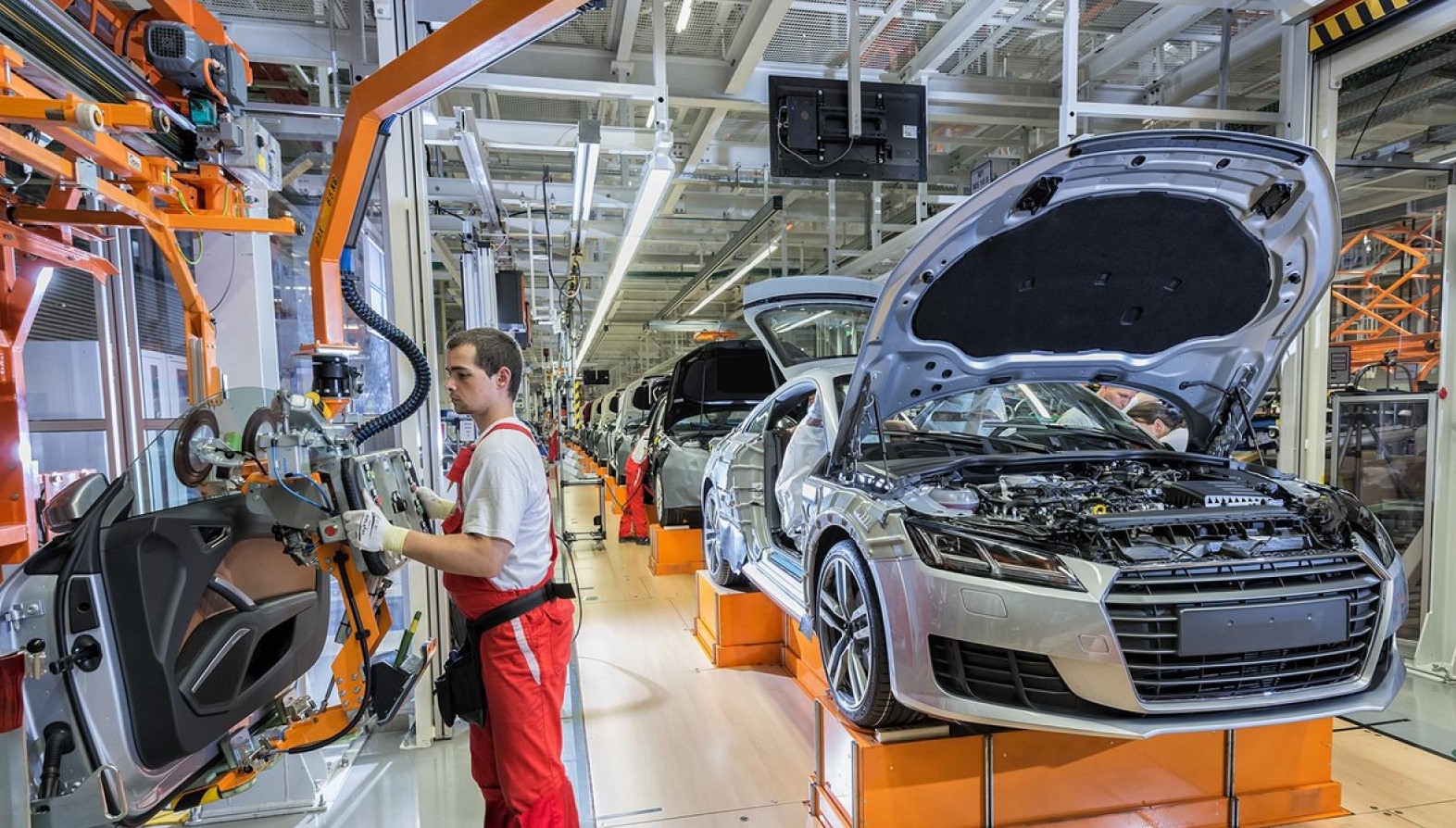
On the factory floor, Europe’s industrial transformation is already visible. Robotic arms assemble components, automated systems monitor production lines, and increasingly sophisticated software connects machinery with logistics and quality control. The modern manufacturing plant is no longer simply a place where products are made. It is an interconnected environment in which mechanical engineering, electronics, data and industrial expertise converge. Hungary occupies an increasingly important position within this transformation, linking established European manufacturing networks with a new generation of international investment.
From the automotive production centres of Győr and Kecskemét to the emerging industrial landscape around Debrecen, the country has developed into a significant manufacturing location. German industrial companies have played a central role in this development, while Asian investors have added another dimension through battery production, electronics and electric mobility. Hungary’s geographical position, European Union membership and established manufacturing workforce make it attractive to companies seeking production capacity within the European market.
But the significance of these investments cannot be measured by factory size or announced capital expenditure alone. A country may host advanced production facilities without controlling the technologies, intellectual property or supplier networks that generate the greatest economic value. For Hungary, the next industrial chapter will depend on how effectively international investment strengthens domestic companies and creates opportunities for local innovation.
The real measure of industrial success is not how many factories a country attracts, but how much knowledge, technology and economic value remains after they are built.
Hungary’s Place in Europe’s Manufacturing Geography
Hungary’s industrial development is closely connected to the transformation of Central Europe following the end of state socialism and the region’s integration into European production networks. International manufacturers recognised the advantages of combining proximity to Western European markets with an established industrial workforce and competitive operating conditions. Automotive production became one of the most visible expressions of this integration, supported by machinery suppliers, electronics manufacturers, logistics providers and specialised engineering services.
The result is an industrial geography that extends across national borders. A vehicle assembled in Hungary may contain components produced in Germany, Slovakia, Poland, the Czech Republic or other European countries. Production equipment may originate from international machinery manufacturers, while software and electronic systems are developed across several locations. Modern manufacturing is increasingly organised through networks rather than isolated national industries.
Hungary benefits from this structure because it is situated within the European Union’s single market and connected to major industrial centres. Its location allows manufacturers to serve European customers while maintaining access to regional supplier networks. This has made the country attractive for automotive production, electronics assembly and industrial investment requiring close integration with European operations.
Yet regional integration also creates competitive pressure. Hungary must compete with neighbouring manufacturing locations that offer their own advantages in engineering, logistics, labour availability and industrial infrastructure. The Czech Republic has developed strong automotive and machinery capabilities, Poland combines manufacturing with a large domestic market, and Slovakia remains deeply integrated into European vehicle production.
Hungary’s future position will therefore depend increasingly on the quality of its industrial ecosystem rather than its ability to compete on operating costs alone. Skilled labour, supplier capabilities, infrastructure reliability, innovation and predictable business conditions are becoming more important as production technologies evolve.
Automotive Manufacturing Remains the Industrial Anchor
The automotive industry continues to define much of Hungary’s international manufacturing profile. Audi’s operations in Győr, Mercedes-Benz in Kecskemét and BMW’s investment in Debrecen illustrate the country’s importance within European automotive production. These facilities represent different stages of industrial development, from established engine and vehicle manufacturing to newer production systems designed around electric mobility and digitally connected manufacturing.
BMW’s Debrecen plant is particularly significant because it reflects the changing technological requirements of automotive production. The facility began series production of the all-electric BMW iX3 in 2025, becoming the first production location for the company’s Neue Klasse generation of vehicles. According to BMW Group’s corporate communications, the new manufacturing concept integrates digital planning, advanced production processes and electric vehicle technologies.
Such investments bring more than production capacity. They create demand for machinery, maintenance services, logistics, industrial software, automation and specialised engineering. They can also provide opportunities for domestic suppliers to improve their technical capabilities by working with demanding international customers.
However, participation in automotive supply chains is increasingly difficult. Manufacturers expect consistent quality, reliable delivery, cost competitiveness and compliance with complex technical standards. Suppliers must often invest in production equipment, digital systems, certification and skilled employees before they can secure substantial contracts.
For Hungarian companies, the opportunity is therefore accompanied by a considerable challenge. Becoming part of an international automotive ecosystem requires continuous technological upgrading. The next stage of development will depend on whether local firms can move beyond relatively simple production activities towards engineering, automation, specialised components and higher-value services.
The Battery Industry Brings Investment and New Dependencies
Hungary’s ambition to become a major European location for battery-related manufacturing has attracted considerable international attention. Asian companies, particularly from South Korea and China, have invested in battery cells, components and associated production activities. These developments reflect the broader restructuring of the automotive industry as manufacturers prepare for the transition towards electric mobility.
CATL’s investment in Debrecen is among the most prominent examples. The Chinese battery manufacturer has announced a major production project intended to serve European automotive customers. South Korean companies have also established important battery-related operations in Hungary, contributing to the country’s growing position within the electric vehicle supply chain.
The industrial logic is understandable. European automotive manufacturers require battery supply chains capable of supporting large-scale vehicle production. Locating battery manufacturing closer to vehicle assembly can reduce logistical complexity, improve coordination and strengthen regional production networks. For Hungary, these investments offer potential employment, export revenue and opportunities for supplier development.
Yet battery manufacturing also exposes important strategic questions. Many critical materials, processing technologies and industrial inputs remain concentrated outside Europe. Establishing a battery factory within the European Union does not automatically create an independent European battery ecosystem. The origin of materials, ownership of technology, research capabilities and supplier relationships all influence the degree of local economic value created.
Environmental considerations are equally important. Battery manufacturing requires energy, water, industrial infrastructure and effective environmental oversight. Local communities have raised concerns about the implications of large industrial projects, particularly regarding resource use and environmental protection. These questions deserve transparent assessment rather than being treated as obstacles to investment.
The long-term value of Hungary’s battery strategy will depend on whether the country develops complementary capabilities in materials technology, engineering, industrial equipment, recycling and research. Without these connections, large investments may strengthen manufacturing output while leaving much of the underlying technological value elsewhere.
The OECD’s Warning: Manufacturing Strength Does Not Guarantee Domestic Value
One of the most revealing assessments of Hungary’s industrial structure comes from the OECD Economic Survey of Hungary 2026. The organisation highlights a substantial gap between the international competitiveness of foreign-owned manufacturers and the integration of domestic companies into their value chains.
According to the OECD, foreign-owned firms account for approximately 80% of Hungarian goods exports. At the same time, domestic value added represents only 41% of manufacturing exports, compared with an OECD average of 64%. The figures are particularly striking in transport equipment, where domestic value added accounts for only 32% of exports.
These statistics do not suggest that foreign investment has been unsuccessful. International manufacturers have contributed significantly to Hungary’s industrial development, export capacity and integration into global production networks. But they reveal a structural weakness: much of the value embodied in Hungarian manufactured exports originates from imported components, technologies and services.
The OECD identifies the underlying problem in its assessment of the country’s investment model:
“The large stock of Foreign Direct Investment (FDI) generates only limited spillovers for Hungary.”
OECD, OECD Economic Surveys: Hungary 2026, Executive Summary.
This observation goes to the heart of Hungary’s industrial challenge. Foreign direct investment can generate employment, exports and economic activity, but its broader contribution depends on the ability of domestic companies to participate in supplier networks, adopt new technologies and develop their own competitive capabilities.
A highly productive international manufacturing plant may operate successfully while sourcing most sophisticated components and services from abroad. Local companies may provide construction, basic maintenance or general services without gaining access to the more technologically demanding parts of the value chain.
The next phase of industrial policy should therefore focus not only on attracting investors, but also on improving the ability of Hungarian businesses to benefit from their presence. Supplier development, technology transfer, research cooperation and workforce training will be essential if foreign investment is to create a more innovative domestic economy.
Local Suppliers Are the Missing Link
For Hungary’s industrial future, the development of domestic suppliers may prove more important than another headline investment announcement. A strong manufacturing ecosystem requires companies capable of producing specialised components, designing production equipment, maintaining advanced machinery and delivering engineering services to international customers.
Many Hungarian small and medium-sized enterprises possess valuable industrial experience. Some have developed specialised capabilities in metalworking, precision engineering, plastics, electronics, tooling and technical services. However, entering the supply chains of large multinational manufacturers can be demanding, particularly when suppliers lack sufficient capital, technical certification or experience with international procurement requirements.
Foreign-owned manufacturers often work with established global suppliers because these relationships offer predictable quality, proven technologies and coordinated production systems. New local companies must demonstrate that they can meet similar standards while remaining commercially competitive. This creates a barrier that cannot be overcome through geographical proximity alone.
The OECD’s 2026 analysis highlights limited technology adoption, management weaknesses and difficulties accessing finance among Hungarian SMEs. These constraints reduce the ability of domestic businesses to benefit from the presence of highly productive international manufacturers.
Addressing the problem requires more than supplier directories or occasional business meetings. Companies need practical support in quality management, production digitalisation, financing, engineering development and international certification. Joint projects with established manufacturers can help smaller firms acquire experience and demonstrate their capabilities.
Universities, research institutions and industrial associations also have a role to play. By connecting applied research with manufacturing requirements, they can support the development of technologies that local companies are able to commercialise.
Industrial investment creates economic opportunity. Local suppliers determine how widely that opportunity is shared.
Machinery, Automation and the Next Productivity Challenge
Hungary’s next industrial transformation will be shaped as much by machinery and software as by vehicle assembly. Automation, robotics, machine vision, industrial data systems and digitally connected production equipment are becoming central to manufacturing competitiveness. Companies increasingly need to improve productivity while managing labour shortages, rising costs and more complex production requirements.
The challenge is particularly relevant to smaller manufacturers. Large international companies can often finance advanced automation and digital infrastructure as part of their global investment programmes. Domestic SMEs may struggle to justify similar expenditure, especially when operating margins are narrow or future demand is uncertain.
Yet automation does not necessarily require replacing entire production systems. Targeted investments in machine monitoring, quality inspection, production planning and energy management can generate meaningful improvements. For example, computer vision can support defect detection, predictive maintenance can reduce equipment downtime, and connected manufacturing software can improve production scheduling.
These technologies also create opportunities for cooperation between traditional manufacturers and technology companies. Software developers, engineering consultancies, automation specialists and equipment suppliers can work together to solve specific production problems. Such partnerships are particularly valuable when they combine knowledge of industrial processes with digital expertise.
The European Commission’s 2026 Country Report on Hungary identifies weak productivity growth, skills shortages and limited digitalisation as important structural challenges. These factors suggest that industrial modernisation cannot rely exclusively on large new factories. Improving the performance of existing businesses may be equally important.
For international machinery and automation suppliers, Hungary therefore represents more than a market for equipment used by multinational manufacturers. There is potential demand among domestic companies seeking to modernise production, improve quality and become more competitive suppliers within European value chains.
Budapest’s Industrial Trade Fairs Reveal the Direction of Change
Industrial exhibitions offer a useful perspective on the technologies and commercial relationships shaping Hungary’s manufacturing economy. At the HUNGEXPO Budapest Congress and Exhibition Center, events such as INDUSTRY DAYS, MACH-TECH and AUTOMOTIVE HUNGARY bring together machinery manufacturers, automation specialists, industrial suppliers and technology companies.
According to HUNGEXPO, the 2026 editions of these industrial exhibitions attracted 370 exhibitors from 22 countries. The event portfolio covered manufacturing technologies, welding, industrial automation, robotics, digitalisation and automotive supply chains. The next INDUSTRY DAYS exhibition is scheduled for 4–7 May 2027, alongside AUTOMOTIVE HUNGARY.
Such exhibitions provide more than opportunities to present equipment. They reveal how industrial companies are responding to changing production requirements. Manufacturers are increasingly interested in systems that improve energy efficiency, reduce downtime, support flexible production and integrate digital technologies into existing operations.
For Hungarian suppliers, trade fairs can provide access to international customers and new technologies. For foreign companies, they offer a way to understand the structure of the local industrial market and identify potential distribution, engineering or technology partners.
However, the value of attending an industrial exhibition depends on preparation. A company seeking market entry should identify relevant customer segments, assess local competition and arrange targeted meetings before arriving. General visibility may generate contacts, but commercial progress requires a clear understanding of the problems potential partners are trying to solve.
Hungary’s industrial exhibitions are therefore particularly interesting when viewed as indicators of technological demand. The machinery on display matters, but the conversations between manufacturers, suppliers and engineers may reveal even more about the country’s industrial direction.
Hungary Between German Industry and Asian Investment
Hungary’s industrial landscape increasingly reflects the interaction between European and Asian manufacturing strategies. German automotive companies have established extensive production operations, while Asian battery and electronics manufacturers have expanded their presence. This combination positions Hungary within several interconnected industrial networks.
For European manufacturers, Hungary provides access to established regional production capabilities. For Asian investors, it offers a location inside the European Union, close to automotive customers and the wider single market. For Hungarian companies, the presence of both groups could create opportunities to develop relationships across different technologies and business cultures.
Yet these relationships are not automatically complementary. International manufacturers may bring their existing suppliers, technical standards and management systems. Domestic companies must compete for opportunities within supply chains that are often organised long before a factory begins production.
There is also a geopolitical dimension. Europe’s debate about economic security, critical technologies and dependence on China has increased scrutiny of industrial investments in strategic sectors. Battery manufacturing, advanced electronics and energy infrastructure are particularly sensitive because they connect economic competitiveness with technological and supply-chain security.
Hungary’s challenge is to benefit from international investment while maintaining the resilience of its industrial economy. A diversified investor base can create opportunities, but concentration in a limited number of industries or technologies may introduce new vulnerabilities.
As discussed in our analysis Europe Wants to Reduce Its Dependence on China. But Does It Understand What That Really Means?, economic resilience requires more than relocating production. It depends on technological capabilities, alternative suppliers and the ability to adapt when international conditions change.
Hungary’s industrial position illustrates this dilemma particularly clearly. It is both a beneficiary of global manufacturing integration and a country whose long-term competitiveness depends on building stronger domestic capabilities within that system.
Energy, Labour and the Limits of Industrial Expansion
Industrial competitiveness cannot be separated from the availability of energy, infrastructure and skilled labour. Automotive and battery manufacturing require reliable electricity, water, transport connections and specialised technical workers. Expanding production capacity places additional demands on these systems, particularly in regions experiencing rapid industrial development.
Hungary faces challenges in each area. Energy import dependence exposes companies to international price fluctuations, while infrastructure investment must keep pace with new industrial facilities. Labour shortages and demographic pressures also complicate the expansion of manufacturing activities.
The European Commission’s May 2026 economic forecast projected Hungarian GDP growth of 1.8% in 2026 and 2.1% in 2027, following growth of just 0.5% in 2025. The forecast anticipated support from new automotive production facilities and recovering exports, but also highlighted risks associated with weak investment, energy costs and external demand.
These figures underline an important distinction between industrial investment announcements and broader economic performance. Large manufacturing projects can increase export capacity, but their contribution to productivity, public finances and domestic business development depends on how successfully they become integrated into the wider economy.
For companies considering Hungary as a production or sourcing location, labour availability, infrastructure quality, energy requirements and regulatory predictability should therefore be assessed alongside investment incentives and operating costs.
Industrial competitiveness is increasingly determined by the total quality of the business environment. A favourable tax rate or investment subsidy may influence an initial decision, but long-term performance depends on operational reliability and the ability to attract and retain skilled employees.
Research and Engineering Must Move Closer to Production
One of Hungary’s greatest opportunities lies in strengthening the relationship between industrial production and applied research. The country has universities, technical institutions and engineering capabilities that could contribute more extensively to industrial innovation. However, translating research into commercially valuable technologies requires stronger connections between academic institutions and businesses.
International manufacturers often conduct their most advanced research and product development activities within established global innovation centres. Production facilities elsewhere may receive sophisticated technologies without participating significantly in their creation. This can limit the development of local intellectual property and engineering expertise.
Hungary could strengthen its position by encouraging collaborative development projects, industrial research partnerships and greater participation by domestic firms in technology-intensive activities. Areas such as machine vision, industrial software, embedded systems, automation and energy-efficient production offer opportunities for specialised companies and research teams.
The OECD’s 2026 survey recommends stronger business-science relationships and improved support for research and development. It also emphasises the importance of skills development and technology adoption among smaller companies.
The opportunity is not necessarily to create a domestic equivalent of every global technology company. A more realistic strategy would be to develop specialised industrial capabilities that complement existing manufacturing activities and serve international customers.
A Hungarian engineering company with expertise in industrial inspection systems, for example, could supply automotive manufacturers in several European countries. A software business developing production optimisation tools could serve factories beyond Hungary. Such activities create economic value that is less dependent on the physical location of a single assembly plant.
What International Companies Should Observe
For European and Asian companies considering industrial cooperation in Hungary, the most useful starting point is to understand the structure of local demand. The market contains large international manufacturers with sophisticated procurement systems, domestic suppliers seeking to upgrade their capabilities and technology companies developing specialised industrial solutions.
Machinery manufacturers may find opportunities in production modernisation, maintenance and automation. Software companies can explore partnerships involving industrial data, quality control, enterprise systems and connected manufacturing. Engineering firms may support equipment integration, production planning and specialised technical services.
Successful market entry requires distinguishing between these customer groups. Selling equipment to a multinational automotive plant is very different from supplying an independent Hungarian manufacturer. Procurement procedures, investment budgets, technical requirements and decision-making structures can vary substantially.
Local partners can help international companies understand these differences. Distributors, engineering specialists and industrial service providers often possess relationships and operational knowledge that are difficult to develop remotely. However, partner selection should focus on technical competence and customer access rather than geographical coverage alone.
Hungary also offers opportunities for cooperation with companies from outside Europe seeking access to European industrial networks. Technology and engineering service providers from Asian markets may find potential partners among Hungarian manufacturers, particularly in areas where digital expertise can complement established production capabilities.
As with any international market, the most promising opportunities emerge when companies identify specific industrial requirements and develop solutions that deliver measurable value.
From Manufacturing Location to Industrial Ecosystem
The central challenge for Hungary is not attracting international manufacturers. It has already demonstrated that capability. The more demanding task is to ensure that industrial investment contributes to a broader transformation of domestic business capabilities.
Foreign-owned factories can provide employment, exports and modern production technologies. But a competitive industrial ecosystem requires more. It needs local suppliers capable of meeting international standards, technology companies that develop specialised solutions, universities connected to industrial demand and entrepreneurs able to build businesses beyond a single customer relationship.
This transformation is particularly important as manufacturing becomes more technologically complex. Electric mobility, industrial automation, artificial intelligence and digital engineering are changing the skills and capabilities required to compete. Countries that remain concentrated in relatively low-value production activities risk losing competitiveness as costs rise and technology evolves.
Hungary’s industrial future will therefore depend on its ability to convert international investment into domestic knowledge, stronger supplier networks and commercially successful innovation. This requires consistent policy, education, access to capital and a business environment that encourages companies to invest in productivity.
It also requires a shift in how industrial success is discussed. Investment announcements and export statistics are important indicators, but they do not tell the whole story. The number of local companies entering international supply chains, the growth of domestic engineering capabilities and the commercialisation of new technologies may provide a more meaningful picture of long-term progress.
The next industrial success story will belong not simply to the countries that manufacture advanced products, but to those that develop the capabilities to design, improve and reinvent them.
Hungary’s Next Industrial Chapter Is Still Being Written
Hungary occupies a distinctive position in Europe’s manufacturing landscape. It combines established automotive production, growing battery-related investment, access to European markets and relationships with industrial companies from both Europe and Asia. These advantages make it an important location in the ongoing transformation of European industry.
But its future cannot be secured through investment volume alone. The country’s long-term competitiveness will depend on productivity, skills, technological development and the ability of domestic companies to participate more deeply in international value chains. The challenge is not to replace foreign investors, but to build an industrial economy that benefits more broadly from their presence.
For international companies, Hungary offers opportunities in machinery, automation, engineering services, industrial software and supplier partnerships. For Hungarian businesses, the next phase of development offers a chance to move towards more sophisticated activities and stronger positions within European manufacturing networks.
The country’s industrial trade fairs, factories and engineering companies provide useful places to observe this transition. They reveal an economy that is increasingly connected to the technologies shaping the future of manufacturing, while still facing the challenge of turning industrial activity into wider domestic innovation.
Hungary’s next industrial chapter will not be defined solely by what international manufacturers produce on its factory floors. It will be defined by what Hungarian companies learn, develop and ultimately create alongside them.
That is the difference between being an important manufacturing location and becoming a genuinely competitive industrial ecosystem.