Czech Republic Is One of Europe’s Best Manufacturing Hubs
In the shifting geography of European manufacturing, the Czech Republic has become one of the continent’s most strategically important production locations. For international companies looking beyond traditional Western European cost structures, yet unwilling to compromise on industrial quality, infrastructure or EU legal certainty, Czechia offers a compelling middle ground.
The country is neither a low-cost frontier market nor merely an extension of the German industrial system. It is a mature manufacturing economy with deep engineering traditions, dense supplier networks, competitive operating costs and direct access to Europe’s largest consumer and industrial markets. For companies evaluating Czech Republic manufacturing, nearshoring to Czech Republic or broader market entry in Central Europe, the country deserves close strategic attention.
Its appeal lies in a rare combination: geographic centrality, industrial depth, technical education, political stability and supply-chain proximity. In an era when companies are rethinking overdependence on distant production sites, Czechia’s position has become stronger, not weaker.
A Manufacturing Economy at the Heart of Europe
The Czech Republic is one of the most industrialised economies in the European Union. Manufacturing accounts for a significantly larger share of economic output than in many Western European markets, giving the country a production profile more comparable to Germany than to service-led economies such as France, the Netherlands or the United Kingdom.
This matters for foreign investors. A manufacturing hub is not created by tax incentives alone. It requires suppliers, skilled labour, transport infrastructure, technical universities, industrial land, logistics providers, certification experience and managers who understand export markets. Czechia has spent decades building precisely this ecosystem.
Its location is difficult to replicate. From the Czech Republic, companies can reach Germany, Austria, Poland, Slovakia and Hungary within short transport windows. For manufacturers serving European OEMs, retailers or industrial customers, this reduces delivery times, lowers logistics risk and supports more responsive production planning.
For a German, Austrian, Swiss, Nordic or Asian company entering Europe, the Czech Republic can function both as a production base and as a regional commercial platform. Prague offers international connectivity and corporate services. Brno provides engineering and technology depth. Ostrava, Plzeň, Liberec, Mladá Boleslav and Zlín anchor powerful regional industrial clusters.
Automotive: The Backbone of Czech Manufacturing
No discussion of manufacturing in the Czech Republic can begin without automotive. The sector remains the country’s industrial backbone and one of the strongest arguments for Czechia as a European production hub.
The Czech automotive ecosystem includes major vehicle manufacturers, tier-one suppliers, component producers, engineering firms, testing facilities and specialist service providers. Škoda Auto, part of the Volkswagen Group, remains the national industrial flagship, while Hyundai and Toyota also operate significant production facilities in the country.
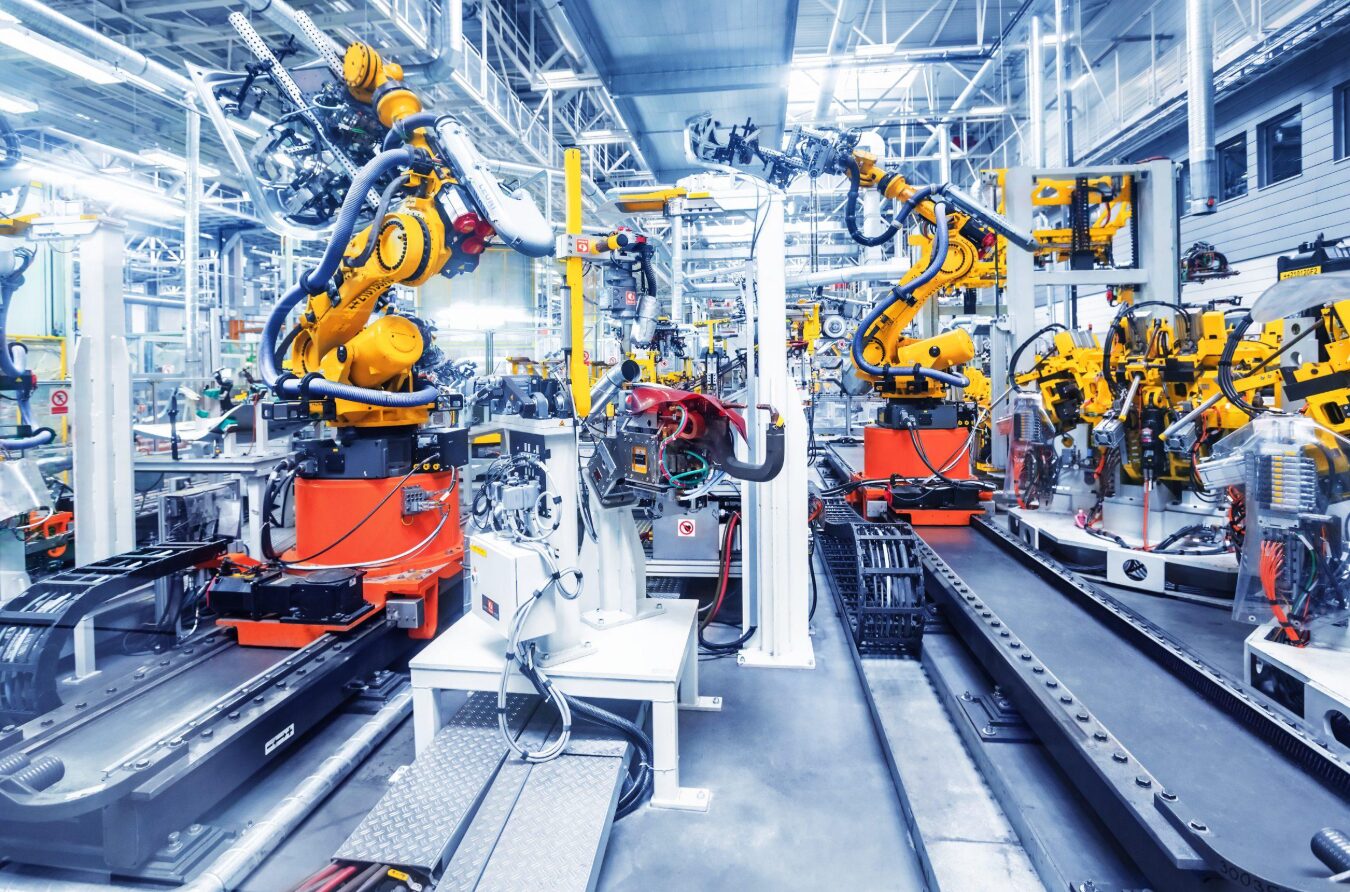
For foreign companies, the automotive sector creates opportunities far beyond vehicle assembly. Demand exists across precision components, automation systems, robotics, sensors, lightweight materials, battery-related technologies, power electronics, software, testing systems and logistics services.
The transition toward electric vehicles is reshaping the sector. While this creates pressure on traditional suppliers, it also opens space for new entrants. Companies with expertise in battery modules, thermal management, charging infrastructure, semiconductors, industrial automation or quality-control systems may find the Czech market increasingly relevant.
The automotive concentration also has a second advantage: it has raised standards across the wider industrial base. Czech suppliers are accustomed to demanding procurement processes, international quality systems, just-in-time delivery, technical documentation and export-oriented production. That makes the country attractive not only for automotive firms, but for manufacturers in adjacent sectors that require similar capabilities.
Engineering and Machinery: A Deep Industrial Tradition
The Czech Republic’s manufacturing strength is not limited to cars. Its engineering and machinery sectors are among the most important reasons why the country continues to attract industrial investors.
Czech engineering has long roots. The country’s industrial tradition predates the modern republic and includes machine tools, heavy machinery, precision engineering, rail equipment, turbines, industrial components and technical services. This heritage remains visible in the skills base and supplier landscape.
For companies seeking engineering suppliers in Czech Republic or considering industrial production in Central Europe, the Czech market offers a valuable mix of competence and cost efficiency. Engineers and technicians are generally well trained, practical and familiar with export-oriented manufacturing standards.
Brno is particularly important in this context. Often described as a technology and engineering centre, the city combines universities, research institutions, software companies and industrial firms. It is also home to major trade fairs and industrial events that connect manufacturers, suppliers and technology providers.
Plzeň, Ostrava and other regional centres also play significant roles. Plzeň benefits from proximity to Bavaria and a long industrial tradition. Ostrava and the Moravia-Silesia region are transforming from heavy industry towards advanced manufacturing, engineering, IT and innovation-led sectors.
This regional diversity gives foreign investors options. A company does not need to choose between one dominant city and the rest of the country. Instead, it can match location strategy to operational need: headquarters in Prague, engineering in Brno, production in Moravia, supplier access in Central Bohemia or logistics near the German border.
Electronics and Semiconductors: Moving Up the Value Chain
One of the more important shifts in recent years has been the Czech Republic’s growing relevance in electronics, semiconductors and advanced technology manufacturing. This is significant because it shows that Czechia is not simply competing on labour cost. It is increasingly competing on industrial capability.
Electronics manufacturing in the Czech Republic benefits from the same fundamentals that support the broader industrial economy: technical skills, supplier depth, EU market access and proximity to major customers. But the sector also aligns with Europe’s wider effort to strengthen strategic supply chains in chips, energy systems, defence technology and digital infrastructure.
For companies in sensors, printed circuit boards, power electronics, semiconductor components, industrial controls, measurement systems or clean technology, Czechia offers a credible platform. The country is large enough to support sophisticated operations, but compact enough for foreign investors to build networks quickly if they enter the market with a structured approach.
The electronics sector is also closely linked to automotive transformation. Electric vehicles, advanced driver assistance systems, battery management, charging infrastructure and industrial automation all require electronic components and embedded systems. This creates overlap between Czechia’s traditional manufacturing strength and its future industrial opportunities.
For international firms, this convergence is attractive. A company entering the Czech Republic does not have to treat automotive, electronics and engineering as isolated markets. In many cases, they form a connected ecosystem of customers, suppliers, research partners and skilled employees.
Nearshoring: Czechia’s Strategic Advantage
The term nearshoring Czech Republic has gained relevance as companies reassess global supply chains. Rising transport costs, geopolitical uncertainty, pandemic-era disruptions and pressure for faster delivery have all encouraged European companies to bring production closer to end markets.
Czechia is one of the natural beneficiaries of this shift. It offers proximity to Germany, Austria and the wider EU market without the same cost base as Munich, Stuttgart, Vienna or Amsterdam. For companies that need European production but cannot justify Western European operating costs, the Czech Republic provides a practical alternative.
Nearshoring is not simply about moving factories closer. It is about reducing operational risk. A Czech production base can support shorter lead times, easier quality control, closer customer collaboration and more resilient inventory management. For complex products, these advantages often outweigh pure labour-cost comparisons.
The country is especially relevant for German Mittelstand companies, industrial suppliers, electronics manufacturers, machinery producers and technology firms seeking a Central European footprint. Its cultural and logistical proximity to Germany makes integration easier, while its independent industrial ecosystem offers opportunities beyond serving German customers alone.
Supply Chains Built for Export
A manufacturing hub is only as strong as its supply chains. This is where the Czech Republic performs particularly well. The country is deeply embedded in European production networks and has long operated as an export-oriented economy.
For foreign manufacturers, this means access to suppliers that understand international standards, documentation requirements, certification processes and demanding delivery schedules. It also means proximity to logistics providers, industrial parks, warehousing operators and cross-border transport routes.
Czechia’s compact geography is another advantage. Management teams can visit suppliers, production sites, customers and logistics partners within short travel windows. For companies entering a new market, this reduces coordination complexity and supports faster relationship-building.
The strongest supply-chain opportunities are often found in sectors where the Czech Republic already has density: automotive components, machinery, metalworking, plastics, electronics, packaging, industrial services, automation and technical maintenance. For foreign companies seeking local partners, distributors or contract manufacturers, these ecosystems provide multiple entry points.
A Strategic Manufacturing Platform for Europe
The Czech Republic’s manufacturing appeal rests on more than one factor. It is the combination that matters: industrial heritage, skilled labour, supplier density, central location, EU membership, reasonable costs and proximity to major European markets.
For companies evaluating Czech Republic manufacturing hubs, the strategic question is no longer whether the country belongs on the shortlist. It clearly does. The more important question is how to enter the market intelligently: which region to choose, which partners to approach, which incentives to assess and which supply-chain relationships to build first.
Czechia is not the cheapest location in Europe. Nor should it try to be. Its value proposition is different. It offers a high-capability manufacturing base at a still-competitive cost level, positioned at the centre of Europe’s industrial map.
In a world where resilience, proximity and execution quality increasingly define competitive advantage, that is a powerful proposition.
Aerospace: A Growing High-Value Manufacturing Sector
While the Czech Republic is internationally recognised for its automotive industry, aerospace manufacturing has quietly developed into one of the country’s most innovative industrial sectors. The industry combines decades of engineering expertise with growing investment in advanced materials, precision manufacturing, avionics and aerospace components.
Today, Czech companies manufacture aircraft structures, engines, composite materials, landing gear systems, avionics, precision-machined components and maintenance solutions for both civil and defence aviation. A large proportion of production is exported to international aerospace manufacturers and Tier 1 suppliers across Europe and North America.
For international investors, the Czech aerospace sector offers attractive opportunities in advanced manufacturing, additive manufacturing, industrial automation, testing equipment, digital engineering and research collaboration. The country’s engineering universities and specialised technical institutes continue to produce highly qualified engineers who support innovation across the aerospace supply chain.
Increasing European defence spending and the modernisation of military capabilities are also creating new opportunities for manufacturers specialising in precision engineering, unmanned systems, electronics, sensors and advanced production technologies. Companies entering the Czech market today are positioning themselves within one of Europe’s fastest-growing industrial ecosystems.
Medical Technology: Combining Engineering with Healthcare Innovation
Another sector gaining increasing international attention is medical technology. Although smaller than automotive or machinery, the Czech medtech industry has become an important contributor to the country’s innovation economy.
The sector includes manufacturers of medical devices, laboratory equipment, diagnostic technologies, imaging systems, healthcare software and specialised precision instruments. Strong engineering capabilities combined with growing investments in research and development have allowed Czech companies to compete successfully in international markets.
Medical technology manufacturers also benefit from close cooperation between universities, hospitals, research institutes and private industry. This collaborative environment supports innovation, product development and clinical testing while providing opportunities for international partnerships.
For foreign companies, the Czech Republic offers an attractive location for manufacturing high-value medical devices, establishing engineering centres or developing European distribution operations. As healthcare systems across Europe continue to invest in digitalisation, diagnostics and advanced medical equipment, demand for innovative technologies is expected to remain strong.
Investment Incentives Strengthen the Business Case
Manufacturing competitiveness is not determined by labour costs alone. Governments that successfully attract international investment also provide predictable legal frameworks, efficient administration and targeted support for strategic industries.
The Czech Republic has developed an investment environment that supports both greenfield projects and business expansion. Investors in selected sectors may benefit from incentives linked to manufacturing, technology centres, research and development activities, high-value services and strategic investment projects.
Support can include corporate income tax relief, training support, job creation incentives and assistance with strategic investment planning. Eligibility depends on factors such as project size, industry, investment value and regional location.
Equally important is the country’s institutional support network. Organisations such as CzechInvest, regional development agencies and local municipalities actively assist foreign investors throughout the market entry process, helping companies identify locations, suppliers, universities and business partners.
This structured investment environment reduces uncertainty and allows international companies to establish operations more efficiently than in many emerging manufacturing markets.
Regional Manufacturing Clusters Create Competitive Advantages
One of the Czech Republic’s greatest strengths lies in its regional industrial specialisation. Manufacturing excellence is not concentrated in a single metropolitan area but distributed across several highly specialised regions.
Prague serves as the country’s commercial and administrative centre. International headquarters, financial institutions, technology firms and professional service providers are concentrated here, making the capital an ideal location for regional management functions.
Brno has developed into one of Central Europe’s leading technology and engineering cities. Home to internationally recognised universities, research institutions and innovative manufacturing companies, Brno has become a centre for industrial automation, software development, electronics and advanced engineering.
Mladá Boleslav remains synonymous with automotive manufacturing through the presence of Škoda Auto and its extensive supplier network. Companies operating within the automotive value chain benefit from immediate proximity to one of Europe’s largest vehicle production ecosystems.
Plzeň combines engineering expertise with excellent transport connections to Germany, making it particularly attractive for export-oriented manufacturers and industrial suppliers serving Bavarian markets.
Ostrava has successfully transformed from a traditional heavy-industry centre into a diversified manufacturing and technology region. Investments in advanced engineering, digital technologies and industrial innovation continue to strengthen its competitiveness.
Other regions, including Liberec, Pardubice, Zlín and South Moravia, contribute specialised expertise in electronics, plastics, precision engineering, aerospace and advanced manufacturing.
This regional diversity enables investors to choose locations based on industry requirements rather than relying on a single national business centre.
Challenges Every Manufacturer Should Understand
Despite its many strengths, the Czech Republic is not without challenges. Companies considering manufacturing investments should evaluate potential risks alongside the country’s competitive advantages.
Labour availability has become increasingly important. Like many European economies, Czechia faces demographic pressures and growing competition for highly qualified engineers, technicians and skilled production workers. Companies entering the market should therefore develop comprehensive recruitment and retention strategies from an early stage.
Competition among employers has also increased wage pressure in certain industrial regions. While operating costs remain competitive compared with Western Europe, labour costs have gradually risen as productivity and technological sophistication have improved.
Manufacturers must also prepare for increasing sustainability requirements. European climate policies, energy efficiency regulations and ESG reporting obligations are reshaping industrial investment decisions. Companies that integrate sustainable production technologies from the outset are likely to gain competitive advantages over time.
Finally, geopolitical developments continue to influence global supply chains. The experience of recent years has encouraged manufacturers to diversify suppliers, strengthen inventory management and improve resilience across their European operations.
For many companies, these challenges reinforce rather than weaken the case for locating production closer to European customers.
Future Outlook: From Manufacturing Base to Innovation Hub
The Czech Republic’s manufacturing story is entering a new phase. While industrial production remains its economic foundation, future growth will increasingly be driven by innovation, digitalisation and high-value manufacturing.
Industry 4.0 technologies, artificial intelligence, industrial robotics, digital twins, predictive maintenance and advanced automation are becoming integral parts of Czech manufacturing. Companies investing today are not simply accessing existing production capacity—they are entering an industrial ecosystem actively preparing for the next generation of manufacturing.
Electrification, semiconductor investments, battery technologies, clean energy systems and defence-related production are expected to create additional demand for specialised suppliers and technology providers throughout the coming decade.
The country’s strong engineering education system, expanding research capabilities and increasing collaboration between universities and industry further strengthen its long-term competitiveness.
For international manufacturers, Czechia offers more than operational efficiency. It provides access to talent, innovation networks and one of Europe’s most sophisticated industrial ecosystems.
One of Europe’s leading manufacturing hubs
The Czech Republic has established itself as one of Europe’s leading manufacturing hubs by combining industrial heritage with continuous modernisation. Few countries offer such a balanced mix of engineering expertise, strategic location, export-oriented supply chains, political stability and access to the European Single Market.
Its strengths extend well beyond automotive manufacturing. Aerospace, medical technology, electronics, industrial engineering and advanced production technologies are expanding rapidly, supported by regional innovation clusters, investment incentives and a highly skilled workforce.
For companies evaluating manufacturing in the Czech Republic, the country’s greatest competitive advantage lies in its industrial ecosystem rather than any single cost factor. Suppliers, research institutions, logistics providers, technical universities and manufacturing specialists work together within interconnected regional clusters that support long-term industrial growth.
As European companies continue to prioritise resilient supply chains, nearshoring strategies and advanced manufacturing capabilities, the Czech Republic is exceptionally well positioned to benefit. Businesses that establish operations today are investing not only in a manufacturing location but also in one of Europe’s most dynamic industrial economies.
For international investors seeking a long-term European production platform, Czechia has evolved from an attractive alternative into a strategic first-choice destination.

Related Articles and Insights on the Czech Republic
- Nearshoring to the Czech Republic. Why Czechia Is Becoming a Strategic Base for European Supply Chains.
- Czech Republic Market Entry Framework: Industrial Expansion Strategy
- How to Find Business Partners and Distributors in the Czech Republic
- Czech Republic Market Entry Guide for Foreign Companies: Opportunity, Costs and the Strategic Case for Czechia in 2026
- Corporate Banking in the Czech Republic. Market Structure, Key Players and Growth Opportunities.