Long before Tabasco became a staple on restaurant tables from New York to Tokyo, its story began on a small island in southern Louisiana. Surrounded by marshlands, ancient oak trees and one of North America’s largest salt domes, Avery Island is far more than a picturesque destination. It is the birthplace of one of the world’s most successful family-owned food businesses.
Today, millions of bottles of Tabasco sauce are shipped to more than 190 countries and territories. Despite its global reach, the company behind the iconic red bottle remains privately owned by the McIlhenny family, preserving a business philosophy that has remained remarkably consistent for over 150 years.
For companies interested in international expansion, brand building and long-term business strategy, Avery Island offers valuable lessons that go far beyond the food industry.
A Small Island with Global Influence
Avery Island is located in the U.S. state of Louisiana, approximately 200 kilometers west of New Orleans. While it appears to be a normal island surrounded by wetlands, it is actually a massive salt dome rising from beneath the Gulf Coast.
The island’s rich salt deposits have been mined for centuries and played an important role in the region’s economic development. For the McIlhenny family, however, the island became something even more valuable: the foundation of a globally recognized premium food brand.
Unlike many multinational food companies that operate from major financial centers, the headquarters of the McIlhenny Company has never left Avery Island. Production, research, administration and brand heritage remain closely connected to the place where everything started.
This commitment to location has become part of the company’s identity.
The Birth of Tabasco
The story began shortly after the American Civil War.
In 1868, Edmund McIlhenny started experimenting with peppers, local salt and vinegar. His goal was simple: create a flavorful pepper sauce unlike anything available at the time.
The original recipe consisted of only three ingredients:
- Red Tabasco peppers
- Avery Island salt
- High-quality distilled vinegar
More than 150 years later, these three ingredients still define the company’s flagship product.
While competitors have introduced hundreds of variations, the original Tabasco recipe has remained virtually unchanged. This consistency has become one of the strongest elements of the brand.
Why Avery Island Still Matters
Many global manufacturers have relocated production to reduce costs or improve logistics. The McIlhenny Company chose a different path.
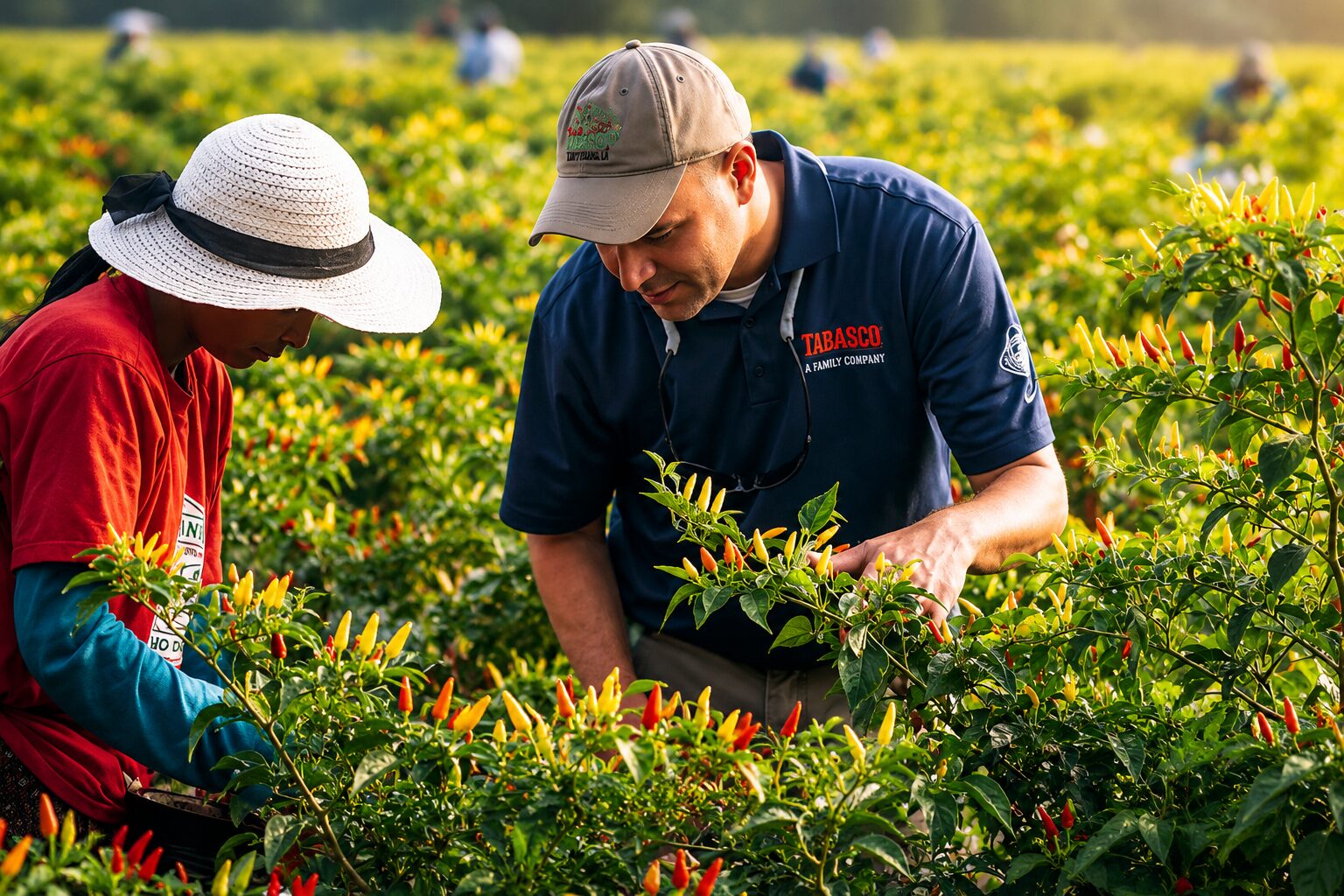
Although peppers are now cultivated in several countries to ensure stable harvests throughout the year, every seed originates from carefully selected plants on Avery Island.
Each growing season begins with seeds taken from the island’s best-performing pepper plants. These seeds are distributed to trusted farmers around the world before harvested peppers return to Louisiana for quality control and processing.
This centralized approach guarantees consistency regardless of where the peppers are grown.
Rather than outsourcing quality management, the company has built an international agricultural network that revolves around one location.
The Secret Ingredient Beneath the Island
Few consumers realize that the salt used in Tabasco sauce comes from directly beneath the company’s headquarters.
The enormous salt dome underneath Avery Island is estimated to contain millions of tons of rock salt. Mining operations have supplied salt for generations, providing one of the essential ingredients in every bottle.
This vertical integration gives the company an unusual degree of control over one of its key raw materials.
In today’s food industry, where supply chains are increasingly vulnerable to disruption, such control represents a significant competitive advantage.
Patience as a Business Strategy
One of Tabasco’s most distinctive production methods is also one of its slowest.
Fresh pepper mash is mixed with Avery Island salt before being transferred into white oak barrels previously used for whiskey production.
There, it matures for up to three years.
Only after this extended aging process is the mash blended with vinegar and filtered into the final sauce.
While many food manufacturers prioritize production speed, Tabasco deliberately accepts longer production cycles in exchange for consistent flavor.
This philosophy reflects a broader business principle: long-term brand value often outweighs short-term efficiency.
A Family Business That Thinks in Generations
Unlike publicly listed corporations driven by quarterly earnings, the McIlhenny Company operates with a multi-generational perspective.
Ownership has remained within the McIlhenny family since the nineteenth century.
This stability has enabled the company to make strategic decisions without the constant pressure of financial markets.
Instead of maximizing annual profits, management has consistently invested in:
- Product quality
- Agricultural research
- Environmental conservation
- Brand heritage
- Long-term international growth
For many family-owned businesses, Tabasco represents an outstanding example of sustainable leadership.
Building a Global Brand Without Constant Reinvention
Many consumer brands rely on frequent product launches and changing marketing campaigns. Tabasco followed another path.
The iconic bottle design has remained largely unchanged for decades. The recipe remains almost identical. The brand identity stays consistent across international markets.
Rather than reinventing itself, Tabasco continuously reinforces what consumers already associate with the brand:
- Authenticity
- Quality
- Heritage
- Simplicity
- Reliability
This consistency creates one of the highest levels of brand recognition in the food industry.
Global Agriculture, Local Identity
Although production remains centered on Avery Island, pepper cultivation has become a truly international operation.
Farmers in Latin America and other suitable growing regions cultivate peppers under strict quality standards developed by the McIlhenny Company.
Every harvest is monitored carefully before returning to Louisiana.
This hybrid model combines:
- Global sourcing
- Centralized quality control
- Local manufacturing
- Strong brand authenticity
It demonstrates how international supply chains can support rather than weaken a premium brand.
Tourism as Part of the Business Model
Avery Island is not only a production site. It is also a tourist destination attracting thousands of visitors every year.
Guests can explore:
- The Tabasco Factory
- The Country Store
- Jungle Gardens
- Bird City wildlife sanctuary
- Museum exhibits about company history
Instead of separating manufacturing from consumers, the company invites visitors to experience the brand where it originated.
This creates emotional connections that traditional advertising cannot easily replicate.
For international visitors, Avery Island becomes part factory tour, part heritage museum and part destination marketing.
Sustainability Beyond Marketing
Environmental protection has long played an important role on Avery Island.
Large areas of the island have been preserved as protected natural habitats. Bird City, one of North America’s oldest private bird sanctuaries, has helped conserve native wildlife for decades.
The company has also invested in responsible agricultural practices and efficient production processes while maintaining the island’s unique ecosystem.
Rather than treating sustainability as a marketing slogan, it forms part of the company’s long-term stewardship philosophy.
What Businesses Can Learn from Avery Island
Protect your identity
Global expansion does not require abandoning local roots. Avery Island remains central to the company’s story.
Build trust through consistency
Consumers value products they can rely on over decades.
Think beyond quarterly results
Long-term investments often create stronger competitive advantages than short-term cost reductions.
Turn history into a strategic asset
The company’s heritage is not simply preserved. It actively supports marketing, tourism and customer loyalty.
Control critical resources
Owning key elements of the supply chain increases resilience during uncertain economic conditions.
Why Avery Island Still Matters in Global Business
In an era dominated by multinational corporations, private equity acquisitions and rapidly changing consumer trends, Avery Island represents a different model of international success.
It demonstrates that a company can remain family owned, protect its heritage, manufacture in its original location and still compete successfully in more than 190 international markets.
The business behind the world’s most famous hot sauce is ultimately not built on complexity.
It is built on patience, consistency, trust and a deep understanding of what makes a brand truly timeless.
For business leaders, entrepreneurs and companies exploring international markets, Avery Island offers an important reminder: sometimes the strongest global strategy begins by staying true to where your story started.

Further Insights
- The Undying Fire: How TABASCO Became the World’s Most Durable Condiment Brand
- The Business of Sriracha. Branding, Growth and Global Success.
- Unlocking Europe. A Practical Guide to Market Entry for OEM Companies.
- European Market Entry: Strategies, Partners and Business Expansion Guide
- Best Agencies for Market Entry in Europe
- How Startups Successfully Enter International Markets