Nearshoring to the Czech Republic: Why Czechia Is Becoming a Strategic Base for European Supply Chains
For many European manufacturers, the logic of globalisation has changed. The old model was built around distance: low-cost production in Asia, long shipping routes, lean inventories and just-in-time delivery. For years, that system worked well enough. It reduced unit costs, supported scale and allowed companies to serve global markets from highly specialised production locations.
Then came a sequence of disruptions: pandemic shutdowns, shipping bottlenecks, geopolitical tensions, rising transport costs, energy volatility and growing pressure to make supply chains more resilient. Suddenly, proximity mattered again. Companies began asking a different question. Not simply: where is production cheapest? But rather: where can we manufacture reliably, close to customers, with skilled labour, stable institutions and manageable costs?
This is where nearshoring to the Czech Republic has become increasingly relevant. Czechia is not the lowest-cost location in Europe, nor does it try to be. Its strength lies elsewhere: in industrial competence, central geography, supplier density and access to the European Single Market.
Why Nearshoring Has Become a Strategic Priority
Nearshoring is no longer a niche concept used only by logistics specialists. It has become a boardroom topic. Across Europe, companies are reassessing how vulnerable their production networks are to long-distance dependencies, political uncertainty and fragile shipping routes.
The aim is not necessarily to bring everything back home. Full reshoring is often too expensive and operationally unrealistic. Instead, many companies are looking for a middle path: move selected production, assembly, sourcing or engineering functions closer to core European customers.
Nearshoring offers several advantages. It can reduce delivery times, improve quality control, simplify communication, lower inventory risk and make supply chains more adaptable. It also helps companies respond faster to customer demand, regulatory changes and technical adjustments.
For German, Austrian, Swiss, Nordic and Western European companies, the Czech Republic is one of the most logical nearshoring destinations. It is close enough to integrate into existing operations, yet cost-competitive enough to justify investment.
Why the Czech Republic Stands Out
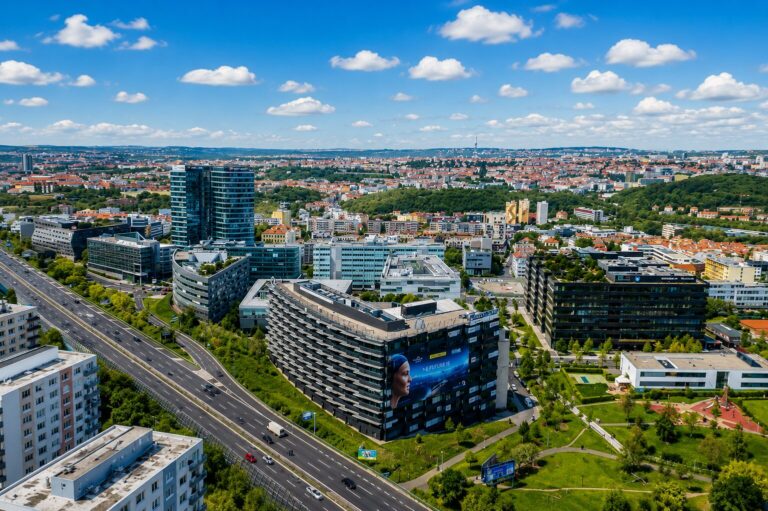
The Czech Republic occupies a distinctive position in Europe’s manufacturing map. It is geographically central, politically stable, industrially mature and deeply connected to German and Central European supply chains.
For companies evaluating nearshoring in Central Europe, Czechia offers a combination that few countries can match. It has a highly industrialised economy, strong engineering traditions, well-developed infrastructure and a workforce familiar with international production standards.
Its location is one of its most important advantages. From Czech production sites, companies can reach Germany, Austria, Poland, Slovakia and Hungary within short transport windows. This makes Czechia particularly attractive for manufacturers serving European OEMs, industrial clients and regional distribution networks.
Unlike more distant manufacturing locations, the Czech Republic allows management teams to visit factories, suppliers, customers and logistics partners frequently. That physical proximity helps build trust, solve problems quickly and improve operational control.
A Manufacturing Economy with Real Depth
Czechia is not simply a convenient location. It is one of Europe’s most industrialised economies. Manufacturing plays a much larger role in the Czech economy than in many Western European countries, creating a dense ecosystem of suppliers, engineers, machine builders, component producers and service providers.
This matters because successful nearshoring depends on more than available factory space. Companies need reliable subcontractors, local maintenance providers, logistics partners, recruitment channels, technical schools, certification experience and management talent.
The Czech Republic already has this ecosystem. Foreign manufacturers do not need to build everything from scratch. They can plug into existing industrial networks, especially in automotive, engineering, electronics, machinery, plastics, metalworking and industrial automation.
For companies considering manufacturing in the Czech Republic, this existing industrial base reduces execution risk. The country understands production. It has spent decades serving demanding European customers, particularly from Germany and the wider DACH region.
Automotive and Engineering as Industrial Anchors
The automotive sector remains the backbone of Czech manufacturing. Škoda Auto, Hyundai and Toyota are among the most visible names, but the real strength of the sector lies in its supplier network. Around vehicle production sits a broad ecosystem of component manufacturers, toolmakers, testing specialists, logistics firms and engineering service providers.
For nearshoring strategies, this is highly relevant. Automotive supply chains require precision, reliability, documentation and delivery discipline. These capabilities have spread into adjacent industries, raising the overall quality of the Czech industrial base.
Engineering is another core strength. The country has a long tradition in machinery, machine tools, precision components, industrial equipment and technical services. This makes it attractive for companies seeking suppliers, production partners or assembly operations in Europe.
For foreign firms, the Czech Republic can serve several roles at once: a production base, a supplier market, a technical engineering location and a platform for serving Central European customers.
Cost Advantage Without Low-Cost Fragility
Nearshoring decisions are often framed as a cost issue. That is only partly correct. Czechia’s cost structure is attractive compared with Germany, Austria, Switzerland or the Netherlands, but the country’s real value lies in the balance between cost and capability.
Labour costs are lower than in Western Europe, office and industrial space remain comparatively competitive, and operating expenses can be managed efficiently. But Czechia is not a pure low-cost market. Wages have risen over time, and competition for skilled labour is real.
For serious manufacturers, this is not necessarily a disadvantage. Low-cost locations can create hidden risks: weaker infrastructure, lower productivity, quality problems, unstable regulation or limited supplier depth. The Czech Republic offers a more mature proposition. Companies pay more than in some lower-cost markets, but they gain stronger execution, better integration with EU customers and fewer operational surprises.
This makes the country especially relevant for medium- and high-value manufacturing, where quality, speed and reliability matter more than the lowest possible wage level.
Skilled Workforce and Technical Capability
A nearshoring location is only as strong as its workforce. Czechia’s education system and industrial tradition have produced a strong base of technicians, engineers and production specialists.
Brno, Prague, Ostrava and Plzeň all play important roles in the country’s talent landscape. Technical universities, vocational schools and applied research institutions support sectors such as mechanical engineering, electronics, automation, software, robotics and materials science.
For companies in industrial automation, precision manufacturing, electronics, automotive components or machinery, this technical base is a significant advantage. Czech workers are generally familiar with structured production environments, international quality standards and export-oriented operations.
However, companies should not assume that talent is unlimited. Skilled labour shortages exist, particularly in engineering and advanced production. Successful investors usually begin recruitment planning early, work with local partners and consider training programmes as part of their market entry strategy.
Infrastructure and Logistics Connectivity
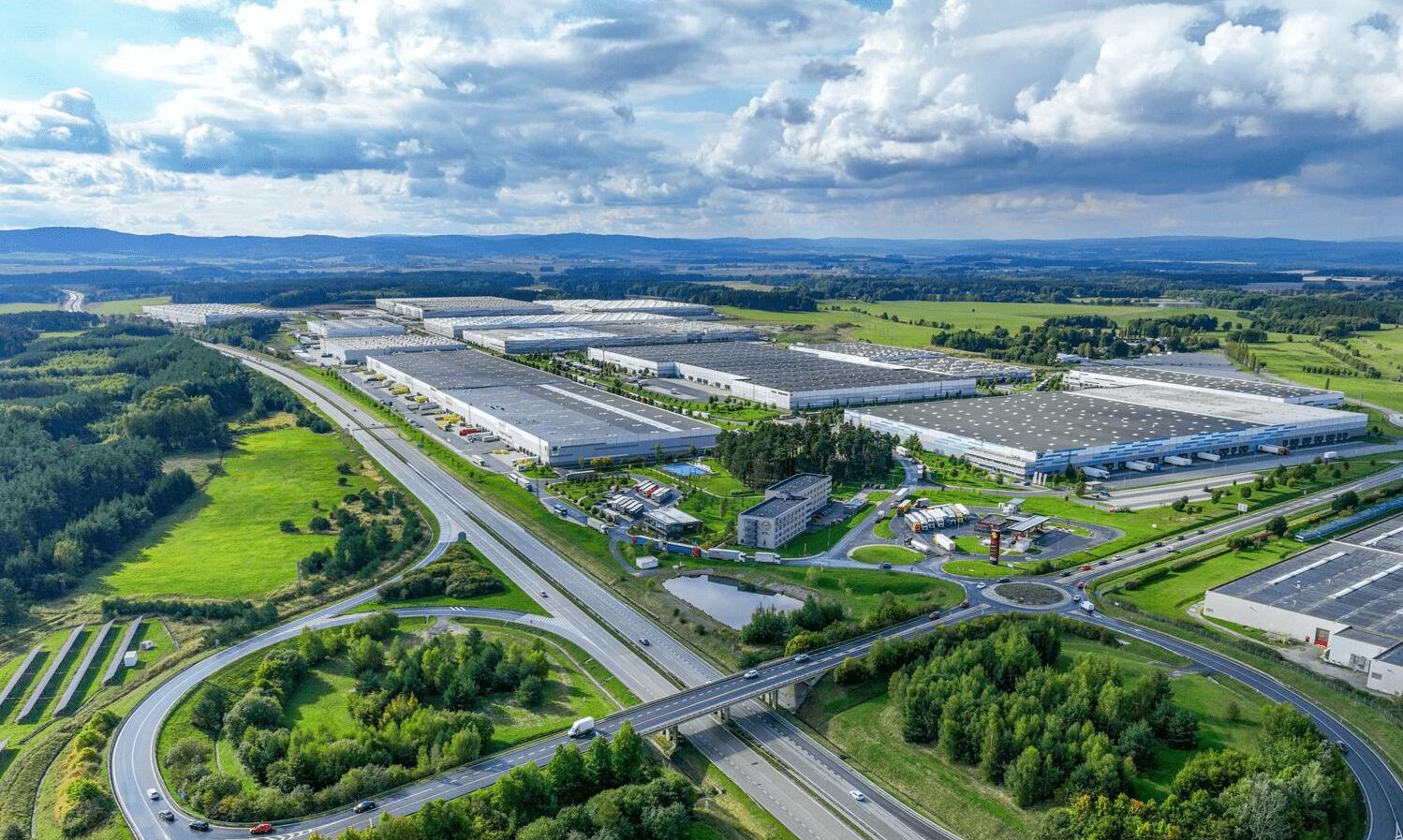
The Czech Republic’s infrastructure supports its role as a nearshoring hub. Its motorway and rail connections link the country to Germany, Austria, Poland and Slovakia, while Prague, Brno and Ostrava provide important logistics and business access points.
For manufacturers, this connectivity reduces lead times and improves flexibility. Components can move quickly between Czech production sites and customers in Germany or Austria. Finished goods can reach Central and Western European markets without the uncertainty of long-distance maritime shipping.
The country’s compact size is another practical advantage. Managers can move between production sites, suppliers and customers within a single day. For companies entering a new market, that operational closeness supports faster decision-making and stronger oversight.
A Strategic Fit for European Supply Chains
Nearshoring to the Czech Republic is not about replacing Asia entirely. For many companies, Asian production will remain important. The more realistic strategy is diversification: keep global sourcing where it makes sense, but create a stronger European production layer for critical components, customer-specific products, faster delivery cycles or higher-value manufacturing.
Czechia fits this strategy well. It offers proximity without excessive cost, capability without Western European price levels and industrial depth without frontier-market risk.
For companies rethinking European supply chains, the Czech Republic provides a practical answer to a difficult question: how to become more resilient without sacrificing competitiveness.
That is why nearshoring to Czechia is likely to remain more than a temporary trend. It reflects a structural shift in how European manufacturers think about risk, distance and control.
Electronics and High-Tech Manufacturing Drive the Next Growth Phase
While automotive manufacturing remains the backbone of the Czech economy, the country’s industrial profile is evolving rapidly. Electronics, semiconductor-related industries, industrial automation and digital manufacturing are becoming increasingly important as Europe seeks to strengthen strategic production capabilities.
The Czech Republic has positioned itself as an attractive destination for manufacturers producing electronic components, industrial control systems, sensors, power electronics, precision instruments and advanced production technologies. These sectors benefit from the country’s well-established engineering expertise, technical universities and growing investment in research and development.
The transition towards electric mobility, renewable energy and industrial digitalisation is creating entirely new supply chains. Battery technologies, charging infrastructure, industrial robotics, AI-enabled production systems and smart manufacturing solutions all require specialised suppliers capable of meeting demanding European quality standards.
For international companies considering nearshoring to the Czech Republic, these developments create opportunities that extend far beyond traditional contract manufacturing. The country increasingly supports high-value production, engineering collaboration and innovation-driven manufacturing.
Access to the European Single Market
One of the greatest advantages of locating production in the Czech Republic is seamless access to the European Single Market.
Manufacturers operating in Czechia benefit from the free movement of goods across the European Union, reducing administrative complexity and allowing products to reach customers without customs barriers inside the EU.
This legal certainty simplifies expansion into neighbouring markets such as Germany, Austria, Slovakia, Poland, Hungary, France and Italy. Companies can establish one production base while serving customers across the continent.
For exporters, the Czech Republic also offers excellent transport connectivity through an extensive motorway network, modern rail infrastructure and access to major European logistics corridors. Prague Airport supports international business travel, while nearby ports in Germany and Poland connect manufacturers with global shipping routes.
Combined with relatively short transport distances, these advantages help companies reduce delivery times, improve supply-chain flexibility and lower logistics risks.
Innovation and Industry 4.0
Manufacturing competitiveness is increasingly determined by technology rather than labour costs alone. Czech manufacturers have embraced this transition by investing in automation, robotics, artificial intelligence and digital production systems.
Across industrial parks and manufacturing facilities, companies are introducing predictive maintenance, digital twins, automated quality control, industrial IoT solutions and data-driven production planning.
This transformation is supported by cooperation between universities, research institutes, innovation centres and private industry. Cities such as Brno have developed strong ecosystems where manufacturing companies work closely with software developers, engineering consultancies and research organisations.
For foreign investors, this creates opportunities not only to manufacture products but also to participate in collaborative innovation projects that strengthen long-term competitiveness.
Regional Manufacturing Clusters Support Specialisation
Another reason why Czechia performs well as a nearshoring destination is the strength of its regional industrial clusters.
Instead of concentrating all manufacturing activity in one metropolitan area, the country has developed specialised regional ecosystems that support different industries.
- Prague – Headquarters, international business services, technology companies and innovation.
- Brno – Engineering, industrial automation, software development, electronics and research.
- Mladá Boleslav – Automotive manufacturing and supplier networks centred around Škoda Auto.
- Plzeň – Mechanical engineering, industrial production and strong export links to Germany.
- Ostrava – Advanced manufacturing, heavy engineering, digital industries and industrial transformation.
- Liberec, Pardubice and Zlín – Precision engineering, plastics, electronics, aerospace and specialised manufacturing.
This regional diversity enables companies to select locations based on operational requirements rather than simply choosing the capital city.
Challenges Companies Should Consider
No investment destination is without challenges, and successful nearshoring requires realistic planning.
The Czech Republic has experienced increasing demand for highly qualified engineers, technicians and skilled production workers. Companies entering the market should therefore prepare comprehensive recruitment strategies and invest in employee development.
Competition for industrial land has also increased in certain regions, particularly around Prague and Brno. Investors should evaluate multiple locations rather than focusing exclusively on the largest cities.
Energy efficiency and sustainability are becoming increasingly important considerations. European climate policy, ESG reporting requirements and customer expectations are encouraging manufacturers to invest in greener production technologies from the outset.
Finally, businesses should recognise that Czechia is a mature industrial economy rather than a low-cost outsourcing destination. Success depends on productivity, innovation and long-term planning rather than labour-cost arbitrage alone.
The Future of Nearshoring in Central Europe
Nearshoring is expected to remain one of the defining trends shaping European manufacturing throughout the coming decade.
Companies are increasingly seeking greater resilience, shorter delivery times and closer relationships with suppliers and customers. At the same time, technological advances allow manufacturers to automate production, making proximity more valuable than purely low labour costs.
The Czech Republic is particularly well positioned to benefit from these structural changes. Continued investment in automotive transformation, semiconductor ecosystems, aerospace, medical technology, advanced engineering and digital manufacturing will strengthen its role within European industry.
Growing cooperation between universities, research institutes and international manufacturers also supports innovation-led growth. This makes Czechia attractive not only for production but also for product development, engineering services and research partnerships.
For international companies, the country’s long-term value proposition continues to improve. Rather than competing solely on costs, the Czech Republic increasingly competes through quality, technical capability and industrial sophistication.
Conclusion
The shift towards nearshoring represents more than a temporary adjustment to recent global disruptions. It reflects a fundamental change in how manufacturers evaluate competitiveness, resilience and operational risk.
The Czech Republic has emerged as one of Europe’s strongest beneficiaries of this transformation. Its central location, mature manufacturing base, highly skilled workforce, advanced supplier ecosystem and seamless access to the European Single Market make it an exceptionally attractive destination for companies seeking long-term industrial growth.
Whether the objective is establishing a new production facility, diversifying suppliers, relocating assembly operations or building a European engineering centre, Czechia offers a combination of stability, industrial expertise and strategic location that few countries can match.
For businesses planning their next phase of European expansion, nearshoring to the Czech Republic should no longer be viewed simply as an operational decision. It is increasingly becoming a strategic investment in resilience, innovation and long-term competitiveness.
Companies that move early, establish strong local partnerships and integrate themselves into the country’s regional manufacturing clusters are likely to benefit from one of Europe’s most dynamic industrial environments for many years to come.

Related Articles and Insights on the Czech Republic
- 5 International Market Entry Strategies for the Czech Republic (With Real Business Examples)
- Why the Czech Republic Is One of Europe’s Best Manufacturing Hubs
- How to Find Business Partners and Distributors in the Czech Republic
- Czech Republic Market Entry Framework: Industrial Expansion Strategy
- Czech Republic Market Entry Guide for Foreign Companies: Opportunity, Costs and the Strategic Case for Czechia in 2026
- Corporate Banking in the Czech Republic. Market Structure, Key Players and Growth Opportunities.