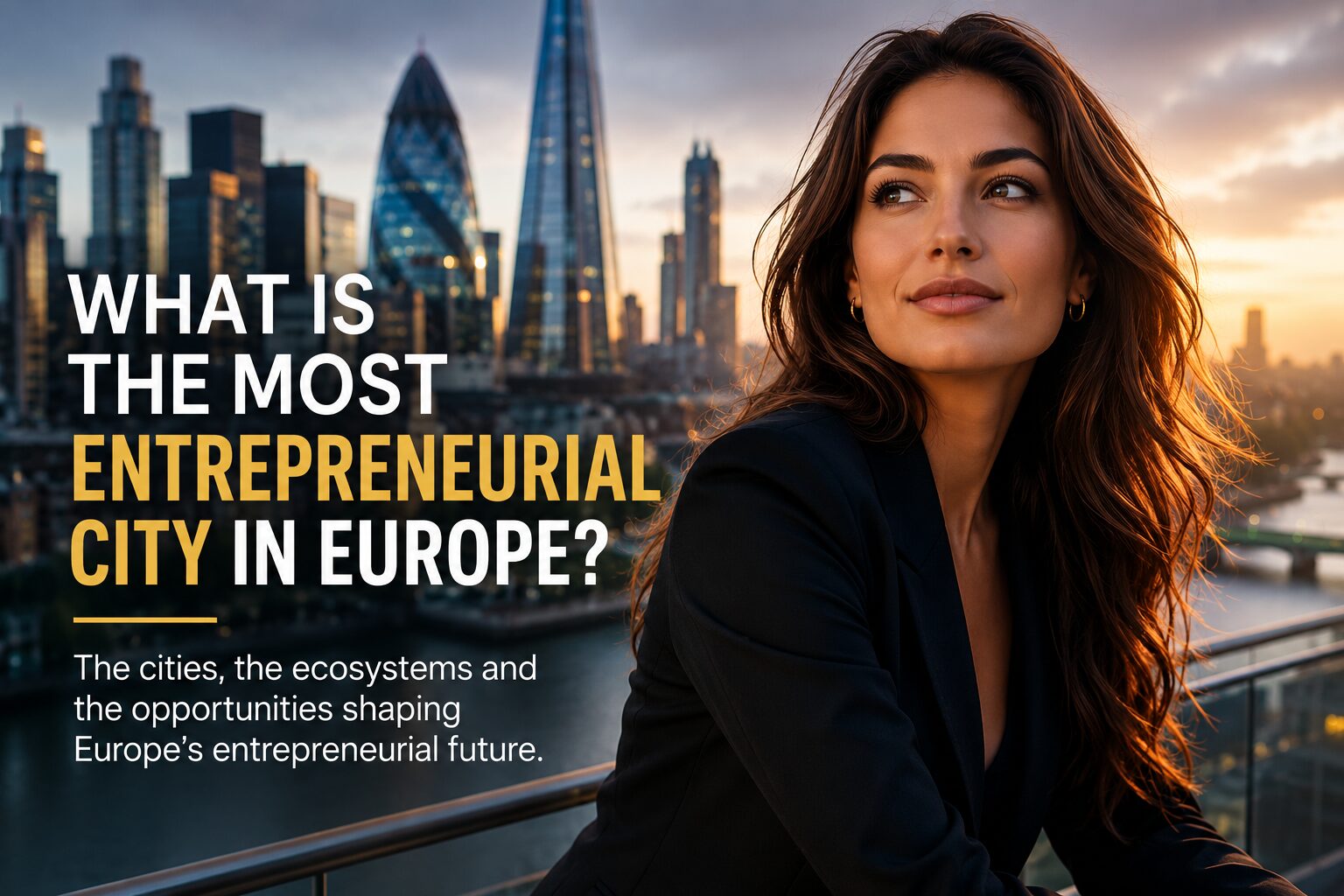
Europe has never been short of ambitious cities. It has capitals of finance, engineering, design, logistics and culture. Yet identifying the continent’s most entrepreneurial city is increasingly difficult. Entrepreneurship today is no longer concentrated in only a few Western European capitals. A new generation of founders, investors and technology companies is emerging across Central and Eastern Europe, reshaping the map of innovation on the continent.
For years, London dominated the European startup conversation. The British capital still offers Europe’s deepest venture capital market, global financial infrastructure and one of the world’s most international business environments. A founder in fintech, AI, enterprise software or digital media can still scale faster in London than almost anywhere else in Europe. The city combines investors, experienced operators, legal expertise and global connectivity in a way few European ecosystems can match.
Yet Europe’s entrepreneurial geography is changing. Paris has become one of the continent’s fastest growing technology hubs. Berlin continues to attract creative and internationally minded founders. Amsterdam and Stockholm remain highly efficient innovation ecosystems. At the same time, cities such as Warsaw, Prague and Bucharest are increasingly entering the European entrepreneurial mainstream.
Warsaw is perhaps the clearest example of this shift. Poland’s capital has transformed itself into one of Central Europe’s most dynamic business cities. Modern office districts, a highly educated workforce and a strong engineering culture have helped create an ecosystem that feels increasingly confident and internationally oriented. Polish startups are becoming more visible in fintech, cybersecurity, SaaS and e-commerce. The city also benefits from something often underestimated in entrepreneurship: resilience. Polish founders are known for operational discipline and pragmatic business thinking rather than excessive startup hype.
Walking through Warsaw today, there is a noticeable sense of momentum. International corporations operate alongside local startups, coworking spaces are filled with multilingual teams and investors increasingly view Poland not only as a market, but as a source of scalable innovation. Compared with some Western European capitals, Warsaw still offers lower operating costs and strong access to technical talent, which has become a strategic advantage.
Prague represents a different entrepreneurial model. The Czech capital combines engineering talent with exceptional quality of life and growing international visibility. Prague’s startup ecosystem is smaller than London, Paris or Berlin, but it has become increasingly attractive for founders seeking a stable, well-connected European base with strong technical capabilities. Cybersecurity, gaming, software development and AI-related services are particularly visible sectors.
There is also a certain understated quality to Prague’s entrepreneurial culture. The city does not aggressively market itself as Europe’s next Silicon Valley. Instead, it attracts founders who value long-term thinking, international accessibility and creative urban life. Cafés, restored industrial spaces and modern coworking hubs create an atmosphere that feels both Central European and globally connected.
Bucharest is perhaps one of Europe’s most underestimated startup cities. Romania has quietly developed a strong reputation in software engineering, IT outsourcing and digital infrastructure. In recent years, this technical foundation has begun evolving into something more entrepreneurial. Romanian founders are increasingly launching SaaS companies, AI startups, cybersecurity ventures and digital platforms aimed at international markets.
The atmosphere in Bucharest feels energetic and ambitious. Compared with more mature ecosystems, there is still a sense that the city is defining its entrepreneurial identity in real time. Young professionals move easily between technology, design, consulting and startup projects. International investors are beginning to pay closer attention to Romania’s technical talent and relatively competitive cost structure.
Importantly, entrepreneurship in Eastern Europe often looks different from Silicon Valley stereotypes. Founders in Bucharest, Warsaw or Prague are frequently more focused on profitability, sustainable scaling and international service models than on aggressive growth narratives. Many companies are built with cross-border thinking from the beginning because local markets alone are often too small for large-scale expansion.
Berlin continues to play an important role within this wider European ecosystem. The German capital remains attractive for founders looking for creative freedom, international networks and experimentation. Berlin’s startup scene developed around digital business models, mobility, media, climate technology and consumer platforms. It remains one of Europe’s strongest magnets for international entrepreneurial talent.
Paris, meanwhile, has become increasingly important in strategic technologies such as AI, defence innovation, deep tech and industrial transformation. Strong government support, growing venture capital activity and the emergence of globally visible French technology companies have strengthened the city’s reputation. France increasingly sees entrepreneurship not only as economic development, but as part of European competitiveness and technological sovereignty.
The result is a more connected European startup landscape. Founders no longer need to choose only between London and Berlin. A company may raise funding in London, hire developers in Bucharest, open partnerships in Warsaw and establish design operations in Prague. Europe’s entrepreneurial future is becoming increasingly decentralised and network-driven.
So what is the most entrepreneurial city in Europe? London still remains the continent’s most complete startup ecosystem. It combines capital, international talent and global visibility at a scale unmatched in Europe. But the more interesting story is how quickly other cities are rising.
Warsaw represents operational ambition. Prague offers stability and creativity. Bucharest brings technical energy and emerging momentum. Berlin remains culturally magnetic. Paris is increasingly strategic and state-backed. Together, these cities reflect a broader transformation inside Europe’s innovation economy.
The next generation of European entrepreneurship may no longer belong to one dominant capital alone. Instead, it may emerge from a connected network of cities stretching from London to Bucharest, from Stockholm to Prague and from Paris to Warsaw. Europe’s strength lies not in copying Silicon Valley, but in combining different cultures, industries and forms of expertise into a uniquely international entrepreneurial landscape.
Further Insights on European Market
- Czech Republic Market Entry Guide for Foreign Companies: Opportunity, Costs and the Strategic Case for Czechia in 2026
- Manufacturing Expansion in Europe. Key Markets, Cost Structures and Location Strategies.
- Unlocking Europe. A Practical Guide to Market Entry for OEM Companies.
- European Market Entry: Strategies, Partners and Business Expansion Guide
- Best Agencies for Market Entry in Europe
- How Startups Successfully Enter International Markets