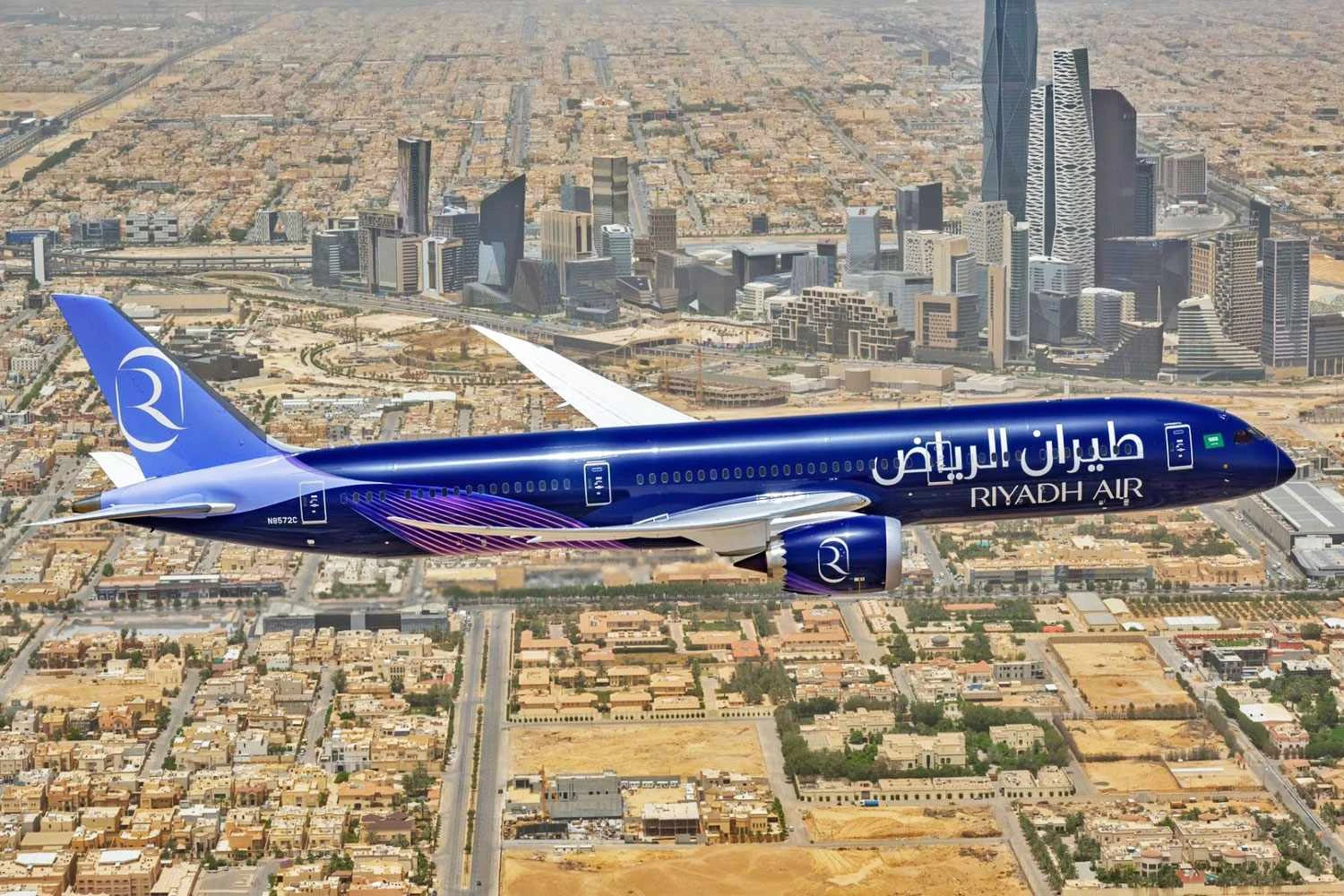
From purple Dreamliners and digital-first cabins to a new global airport north of the Saudi capital, Riyadh Air is becoming one of the most ambitious aviation projects in the world. Behind the aircraft lies a larger economic story. Saudi Arabia wants to reposition Riyadh within the global flows of people, investment and trade.
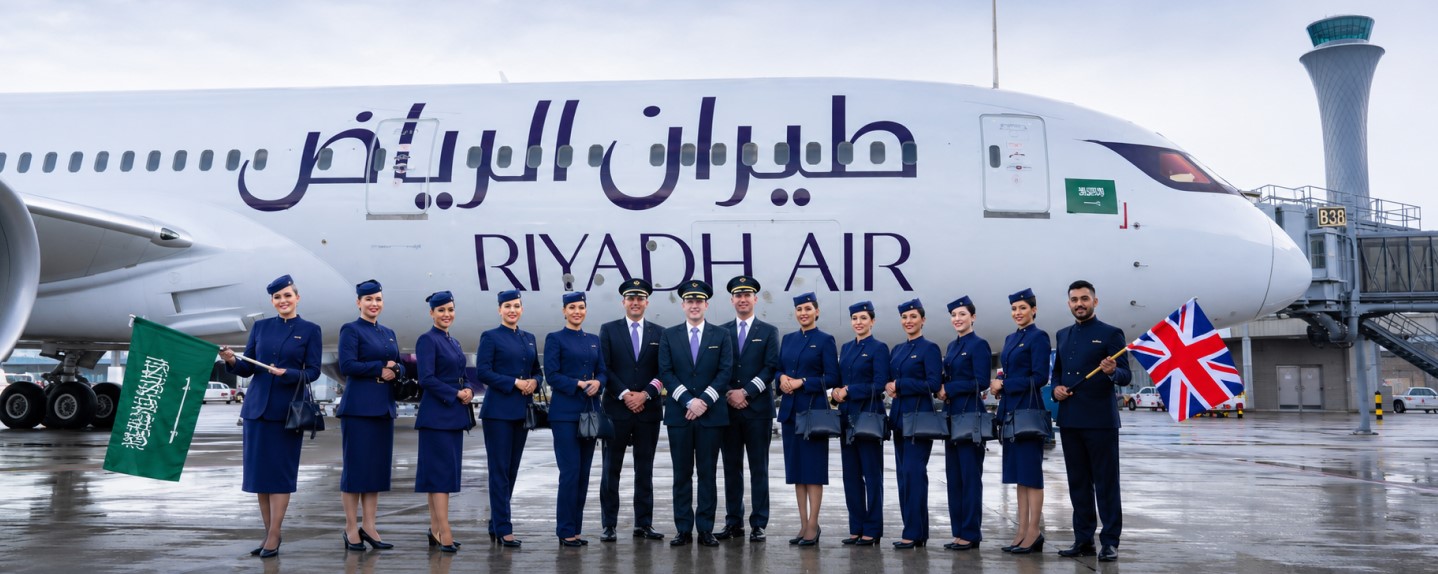
When a purple Boeing 787-9 carrying the colours of Riyadh Air arrived at London Heathrow in June 2026, the significance went well beyond another airline appearing on the airport’s departure boards. For three years, Riyadh Air had existed largely as an ambitious promise. Announced in 2023 by Saudi Arabia’s Public Investment Fund, the airline came with striking aircraft liveries, large fleet commitments and an equally ambitious objective. Connecting Riyadh with more than 100 destinations by 2030.
Now the aircraft are flying. London became the symbolic bridgehead, with the first newly delivered Boeing 787-9 Dreamliners entering commercial service between Riyadh and Heathrow in June. The network then began to expand towards destinations including Dubai, Cairo, Jeddah, Madrid, Manchester, Mumbai, Kuala Lumpur and Málaga. For Tony Douglas, Riyadh Air’s chief executive and the former head of Etihad Aviation Group, the project represents what he has described as the biggest global aviation start-up in modern history.

The description is ambitious, but the scale of what is being constructed around Riyadh suggests it should not be dismissed as corporate hyperbole. Riyadh Air is not simply another airline entering an already crowded Gulf market. It is becoming the airborne component of a much larger attempt to reposition the Saudi capital within the global flows of people, capital, trade and ideas.
Building an Airline on a Blank Sheet of Paper
There are few opportunities in modern aviation to build a full-service international network airline almost entirely from scratch. Most established carriers are complicated organisations shaped by decades of mergers, ageing aircraft, legacy IT systems, airport arrangements, employment structures and customer programmes. Riyadh Air has almost none of that baggage.
Douglas and his team have repeatedly presented this as one of the company’s principal advantages. Rather than trying to transform an airline into a digital business, Riyadh Air has been conceived as a digital business that happens to operate aircraft. Airlines have spent much of the past decade trying to catch up with the digital expectations established by technology companies, online retailers and modern hospitality brands. Riyadh Air can begin with those expectations built into its commercial architecture.

The airline’s deep purple branding, cabin interiors and fashion-led crew uniforms deliberately evoke a period when airlines were not merely transportation companies but international cultural brands. Saudi designer Mohammed Ashi, founder of Paris-based Ashi Studio, was commissioned to develop the crew collection, with the designs presented in Paris rather than at an aviation trade show. Douglas has spoken of the great airline brands of the jet age, including Pan Am and TWA, when aviation represented modernity, glamour and international possibility. Riyadh Air is attempting a contemporary Saudi interpretation of that idea.
The Hardware Behind the Ambition
Underneath the branding sits an increasingly formidable aircraft order book. Riyadh Air’s long-term fleet strategy spans three principal families. Airbus A321neos for regional and lower-density routes, Boeing 787 Dreamliners as the backbone of the long-haul network, and Airbus A350-1000s for larger and longer intercontinental missions.
At the Paris Air Show in 2025, Riyadh Air placed a firm order for 25 Airbus A350-1000 aircraft. In July 2026 it increased that commitment to 31, making it the first Saudi carrier expected to operate Airbus’s largest current long-range twinjet. At Farnborough in July, the airline also exercised options for another 28 Boeing 787s, with 20 converted to the larger 787-10 variant.

The decision provides a clue to how the network could evolve. The 787-9 offers the range required for long-distance international markets, while the larger 787-10 adds capacity and attractive economics for higher-volume routes. The A350-1000 extends the strategy towards very long-range and larger intercontinental operations. Combined with 60 A321neos, Riyadh Air is building a flexible fleet capable of serving everything from regional Gulf markets to Europe, Asia and eventually North America.
The United States is already moving onto the horizon. In June 2026, Riyadh Air received approval from the US Department of Transportation to operate services between Saudi Arabia and the United States. At the same time, partnerships with established international carriers are allowing the airline to build a larger virtual network while its own fleet remains relatively small. Agreements and partnerships have involved airlines including Delta Air Lines, Virgin Atlantic, Turkish Airlines, Air France-KLM, Air India and Air Europa. It is a pragmatic strategy for a start-up with global ambitions. Build connectivity faster than aircraft can be delivered.
Why Riyadh Needs Its Own Global Airline
The more interesting question is not only how Riyadh Air intends to expand, but why Saudi Arabia believes it needs the airline in the first place. For years, travellers from the Kingdom heading towards many major international destinations have often connected through somebody else’s hub. Dubai has Emirates, Doha has Qatar Airways, Abu Dhabi has Etihad and Istanbul has Turkish Airlines. Each has used geography to build powerful connecting networks between Europe, Asia and Africa.
Saudi Arabia occupies much of the same geographic sweet spot, but Riyadh has never played an equivalent role. Douglas has highlighted the consequences, particularly for destinations in Asia-Pacific that historically had limited direct connectivity with the Saudi capital. Saudi travellers therefore often begin an international journey by flying through another regional hub. Riyadh Air intends to change that equation.
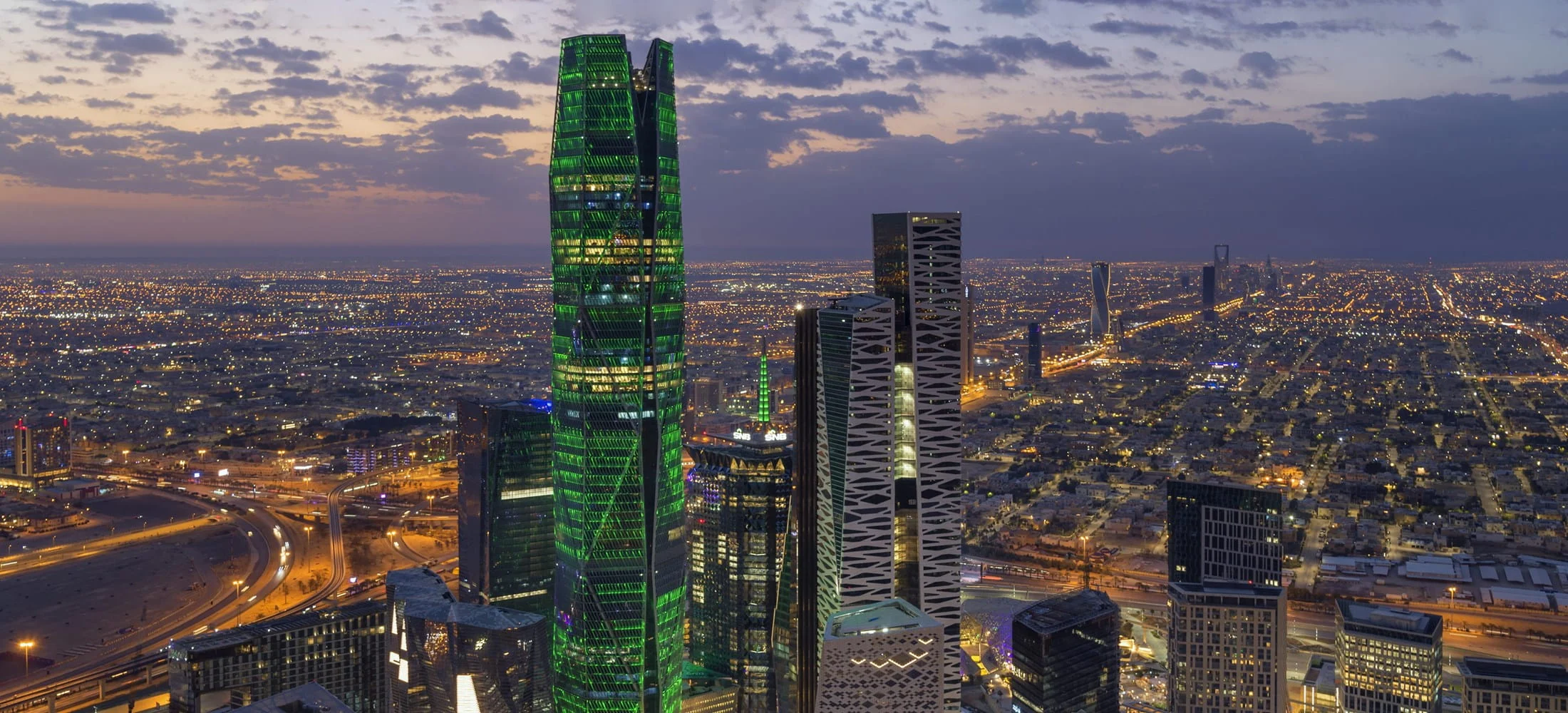
This is important because it challenges the easiest comparison made about the new carrier. Riyadh Air does not necessarily need to become another Emirates. Saudi Arabia itself is a substantial market, while Riyadh is developing into an increasingly important centre for regional corporate headquarters, investment, entertainment and international events. The Kingdom is also trying to increase inbound tourism dramatically.
An Airport Built for a Different Riyadh
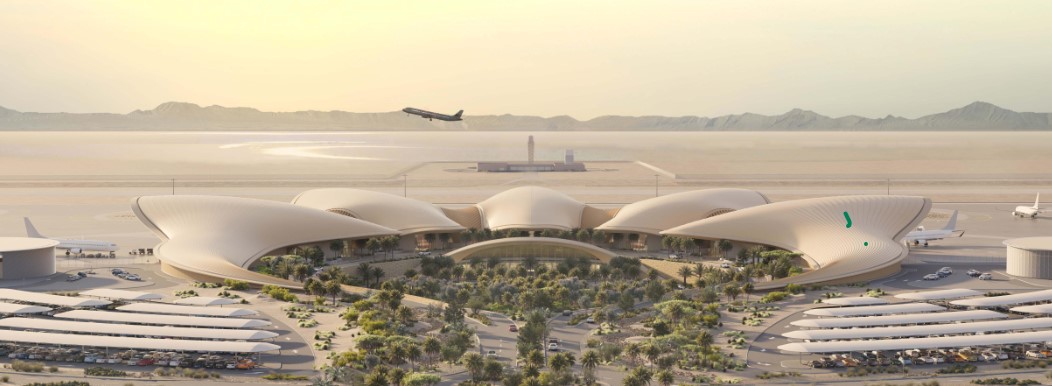
To understand the full scale of the strategy, it is necessary to look beyond Riyadh Air. North of the capital, plans for King Salman International Airport envisage one of the largest aviation developments in the world. The project covers approximately 57 square kilometres and incorporates six parallel runways alongside logistics, commercial, retail and residential areas. Long-term plans envisage capacity for as many as 185 million passengers annually by 2050.
The airport is being conceived as part of Riyadh’s urban and economic development rather than simply as infrastructure for aircraft movements. Logistics, commerce, hospitality and real estate form part of the wider proposition. Riyadh Air and the airport should therefore be understood together. The airline provides the network, while the airport provides the physical platform on which that network can grow.
Around both sits a broader Saudi aviation ecosystem that includes aircraft leasing, maintenance, cargo and logistics. Riyadh Air itself launched Riyadh Cargo in 2026, adding another dimension to the strategy. For a country seeking to develop as a logistics bridge between three continents, belly cargo and eventually broader freight connectivity are not secondary considerations. Aircraft carry not only tourists and business travellers but also pharmaceuticals, electronics, components, e-commerce shipments and other time-sensitive goods on which international supply chains depend.
Why Europe Matters
Europe has significance for Riyadh Air beyond passenger numbers. The continent is simultaneously a source of tourists, investment, technology, professional expertise and multinational companies doing business in Saudi Arabia. London’s role as an early international destination was therefore highly symbolic.
The economic relationship between Saudi Arabia and Europe is becoming more complex than the traditional energy trade. European companies are participating in infrastructure, hospitality, technology, healthcare, financial services, entertainment and industrial projects across the Kingdom. At the same time, Saudi investors and companies are becoming increasingly visible internationally.
Air connectivity facilitates those relationships. A direct flight does something deceptively simple to an international market. It reduces distance. A city that previously required a connection suddenly becomes a practical destination for a short business trip. Executives can move more easily, investors visit more frequently, tourism becomes simpler and cargo moves faster. New routes rarely create economic relationships on their own, but they can accelerate relationships that are already forming.
This is why Riyadh Air deserves attention outside the aviation industry. For companies looking at Saudi Arabia, new connectivity affects practical questions of market entry, business development, talent mobility and supply chains. For Saudi companies expanding internationally, the same network can provide easier access to customers, partners and investment markets abroad.
A Different Kind of Gulf Airline?
Riyadh Air’s greatest advantage may ultimately be something much less spectacular than a new aircraft or a futuristic airport, its home city. Dubai and Doha demonstrated that a strategically located airport could connect continents even when the local market was relatively limited. Riyadh begins with a different proposition.
The city is already the political and increasingly corporate centre of the largest economy in the Arab world. As Saudi Arabia attempts to diversify away from hydrocarbons, Riyadh is attracting companies, investment and people at a pace that would have been difficult to imagine a decade ago. If that transformation continues, Riyadh Air may not have to persuade every passenger to change planes in Saudi Arabia. It may increasingly be flying people who actually want to be there.
That could become its most important distinction. For now, Riyadh Air remains a relatively small airline with an extraordinarily large order book and even larger ambitions. Turning aircraft orders, airport plans and national strategies into a consistently profitable global network will be the difficult part.
But that is precisely why Riyadh Air is worth watching. Airlines have always been more than transportation companies. At their most consequential, they reveal where cities, capital, businesses and people are moving next. For much of the past three decades, the rise of Emirates told the story of Dubai’s emergence as a global crossroads, while Qatar Airways did something similar for Doha.
- Riyadh Air Official website, destinations and passenger experience.
- Riyadh Air Media Hub Latest developments, new routes, fleet announcements and partnerships.

Further Insights
- Expanding into Britain: What International Companies Need to Know
- Inside Avery Island: The Business Behind the World’s Most Famous Hot Sauce
- The Business of Sriracha. Branding, Growth and Global Success.
- Unlocking Europe. A Practical Guide to Market Entry for OEM Companies.
- European Market Entry: Strategies, Partners and Business Expansion Guide
- Best Agencies for Market Entry in Europe
- How Startups Successfully Enter International Markets