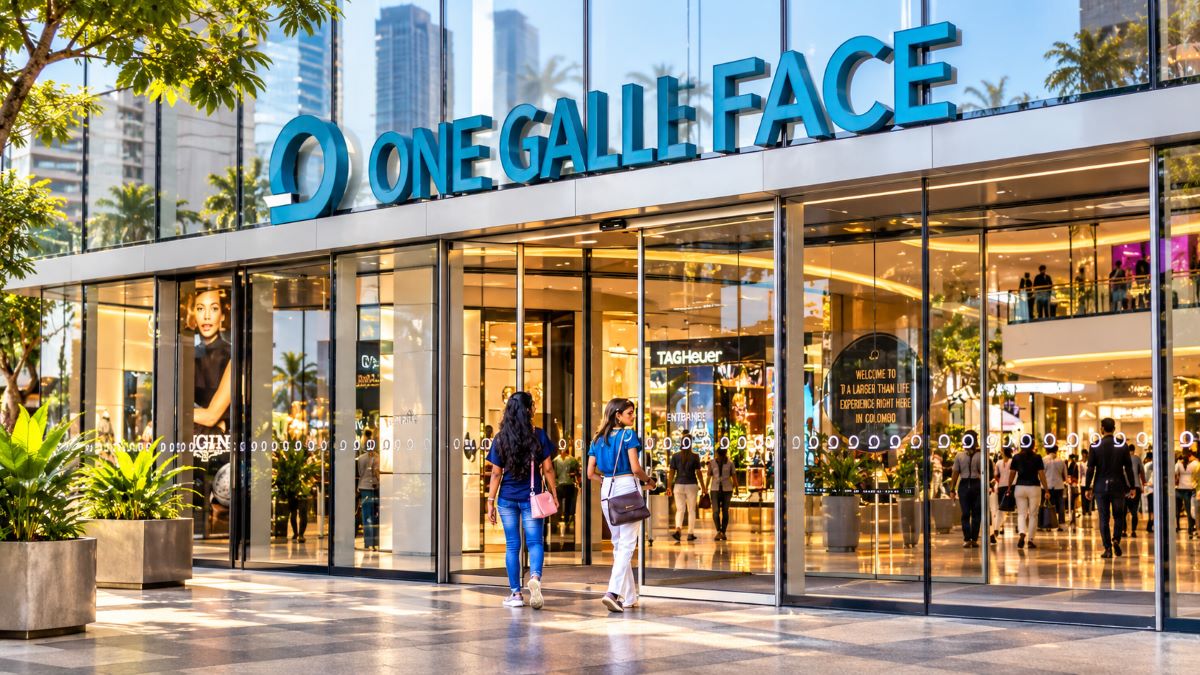
Sri Lanka’s consumer economy is recovering, but the country’s shoppers are not returning to their old habits. A new study by Boston Consulting Group reveals a market in which household spending is rising, purchasing decisions are becoming more deliberate and digital discovery is reshaping the relationship between consumers and brands. For international manufacturers, the opportunity is considerable. So is the risk of misunderstanding it.
8 October 2026 For international consumer brands assessing opportunities in South Asia, Sri Lanka presents an increasingly interesting proposition. Its population of roughly 22 million is modest compared with neighbouring India, yet its established retail operators, sophisticated consumer segments and improving economic conditions offer a potentially attractive environment for carefully targeted market entry.
The country is emerging from one of the most severe economic crises in its modern history. But the recovery is neither uniform nor straightforward. Household consumption has returned to record levels, while purchasing power remains under pressure and the gap between different consumer groups has become more pronounced.
The implications extend well beyond Sri Lanka. The country illustrates a broader challenge confronting international consumer businesses in emerging markets: how to build brands when spending is recovering faster than confidence, and when digital influence is expanding without necessarily displacing traditional retail.
Sri Lanka’s consumer market is not simply returning to growth. It is being reorganised around value, accessibility and a more demanding customer.
Sri Lanka’s Consumer Recovery: Stronger Spending, Uneven Prosperity
The latest research provides an unusually detailed picture of this transition.
According to Boston Consulting Group’s October 2026 study, Changing Path to Purchase in Sri Lanka, conducted in collaboration with the Ceylon Chamber of Commerce, real household consumption increased from approximately LKR 8 trillion in 2023 to LKR 8.9 trillion in 2025. The latter figure also exceeds the LKR 8.2 trillion recorded in 2019.
Household consumption represented an average of 67% of real GDP between 2023 and 2025, underlining its importance to the country’s economic performance.
Yet the headline numbers conceal a more complicated reality.
BCG’s survey of 2,272 consumers found that 77% expect household spending to increase over the next six months, while only 38% expect their incomes to rise. This is not necessarily evidence of an emerging consumer boom. Higher expected expenditure can reflect the increasing cost of essential goods rather than a willingness to purchase more products.
Indeed, the Central Bank of Sri Lanka reported annual headline inflation of 8.0% in September 2026, with food inflation reaching 8.7%.
For manufacturers, the distinction between nominal expenditure, real consumption and discretionary purchasing power is fundamental. A market in which households spend more does not automatically support higher retail prices or premium product launches.
Successful international brands will therefore need to distinguish between consumers who are upgrading their purchases, those maintaining established preferences and those actively trading down.
The Middle Class Is Changing And Geography Matters
One of the most consequential findings concerns Sri Lanka’s middle class.
According to reporting by the Daily FT on 8 October 2026, the BCG research indicates that approximately 400,000 households have moved out of the middle class since 2020.
Average nominal monthly household income increased from approximately LKR 67,000 in 2020 to LKR 109,000 in 2026, but this increase should not be confused with an equivalent improvement in real purchasing power.
The geographical distribution of demand is equally important. Rural Sri Lanka accounts for an estimated 56% of the country’s middle-class households, according to the study.
That challenges the assumption that Colombo and its surrounding urban districts can adequately represent the national consumer market.
For an international food, beverage, personal-care or household-products manufacturer, this creates two distinct market-entry questions.
First, which consumer groups offer sufficient purchasing power and category demand to justify an initial launch? Second, which distribution partners can provide commercially viable access beyond the capital?
Colombo remains a logical starting point for premium positioning, modern retail relationships and consumer research. But the longer-term opportunity may depend on developing a distribution model capable of reaching secondary cities and regional communities.
The commercial geography of Sri Lanka is wider than Colombo. Brands that confuse urban visibility with national distribution risk overlooking much of the market.
Digital Discovery Is Transforming the Path to Purchase
Another important development is the changing way consumers discover and evaluate products.
BCG’s research identifies a growing role for digital channels, online information and emerging AI-enabled tools in consumer decision-making. The significance is not simply that Sri Lankans are spending more time online. It is that the information influencing purchases increasingly comes from several sources before a transaction takes place.
A consumer may encounter a product through social media, compare alternatives online, consult recommendations and ultimately purchase the item from a physical retailer.
This creates a more fragmented customer journey than traditional advertising models assume.
For international brands entering Sri Lanka, digital marketing should therefore be considered part of the distribution strategy rather than a separate activity.
Product availability, pricing, online discoverability, credible product information and retail execution need to reinforce one another.
There is also an important distinction between digital influence and e-commerce penetration. A digitally influenced purchase may still take place in a supermarket, pharmacy, neighbourhood grocery store or other physical outlet.
International manufacturers should avoid treating growing digital engagement as proof that online-only distribution will be sufficient.
The stronger approach is an integrated model combining digital brand discovery with reliable physical availability.
Modern Grocery Retail Is Becoming More Important
Sri Lanka’s supermarket sector provides an established route into the consumer market, particularly for packaged food, beverages, household goods and personal-care products.
Among the country’s principal organised grocery retailers are Cargills Food City, Keells and Arpico.
Cargills Food City reported a network of 562 stores in April 2026, covering all districts of Sri Lanka. Its extensive presence illustrates how organised retail can combine modern merchandising and logistics with geographical reach.
Keells, operated within John Keells Holdings, offers another indication of the sector’s momentum. In its first-quarter results for the 2026/27 financial year, John Keells reported 13% same-store supermarket sales growth, comprising a 7% increase in average basket value and 6% growth in customer footfall.
These figures suggest that established retail operators are benefiting from stronger consumer activity. They do not, however, demonstrate that every product category or retailer is experiencing the same growth.
For international suppliers, organised supermarkets can offer valuable advantages: structured procurement processes, product visibility, merchandising opportunities and potentially more predictable supply-chain requirements.
Yet access to a leading retail chain should not be confused with access to the entire market.
Traditional grocery outlets, independent retailers, regional wholesalers and specialist stores remain important parts of Sri Lanka’s distribution landscape.
The appropriate channel strategy will depend on product positioning, consumer purchasing frequency, storage requirements and price sensitivity.
What Sri Lanka Can Learn from Asia’s Convenience Retail Markets
Across Asia, convenience retail has developed into an increasingly sophisticated channel for food, beverages and everyday consumer products.
Taiwan provides one of the region’s clearest examples of how dense store networks, carefully managed product assortments and sophisticated logistics can influence consumer behaviour.
As examined in NeoMarketWays’ analysis of Taiwan’s convenience store market and retail distribution, convenience operators can serve as important intermediaries between consumer brands and customers seeking accessible, ready-to-consume products.
Sri Lanka’s retail structure is different. Its supermarket chains, neighbourhood shops and regional distribution networks have developed under distinct economic and demographic conditions.
Nevertheless, several commercial principles are transferable.
Smaller pack sizes, accessible price points, convenient product formats and dependable replenishment can all influence purchase decisions in markets where consumers shop frequently and manage household budgets carefully.
For beverage manufacturers, this may create opportunities in ready-to-drink coffee, functional beverages, hydration products and other portable formats. But category attractiveness must be tested against actual consumer demand, local regulations and retailer economics.
The wider lesson is that retail formats cannot simply be transplanted from one country to another.
NeoMarketWays has explored this distinction in its analysis of Taiwan’s convenience store culture, where store density and service integration have shaped a distinctive retail environment.
For Sri Lanka, the more relevant question is how international brands can adapt successful convenience principles to the country’s existing retail ecosystem.

ABOUT THE AUTHOR
Tobias W. Loitsch
Tobias W. Loitsch is an author and international market entry specialist with a focus on consumer markets, retail distribution and cross-border business opportunities.
At NeoMarketWays, he works with manufacturers and consumer brands looking to expand into new markets across Europe and Asia, helping them identify commercial opportunities, establish local partnerships and gain access to retail and convenience store networks.
His writing explores how markets evolve, consumer behaviour changes and businesses navigate international expansion.
Where International Consumer Brands Could Find Opportunities
Several consumer categories merit closer investigation, although their commercial potential varies considerably.
Packaged food and snacks. Products offering convenience, recognisable quality and appropriate pricing may appeal to consumers seeking practical everyday purchases. Imported brands must demonstrate sufficient differentiation to justify any price premium over domestic alternatives.
Non-alcoholic beverages. Ready-to-drink products, hydration beverages, functional drinks and selected premium offerings may present opportunities in urban and higher-income segments. However, manufacturers should validate demand, cold-chain availability, packaging economics and applicable product regulations before committing to large-scale distribution.
Personal care and household essentials. These categories may benefit from established purchasing routines and opportunities for differentiated formulations or packaging. Yet consumer trust, affordability and repeat-purchase economics will remain decisive.
Health-oriented and specialist products. Selected categories may appeal to consumers with particular lifestyle preferences. Brands should distinguish between an identifiable consumer trend and a commercially scalable market, while ensuring that any product claims comply with Sri Lankan requirements.
Premium imported goods. Colombo and selected urban locations may support carefully positioned international products. Premiumisation, however, should not be treated as a nationwide trend without supporting category-specific evidence.
The most attractive opportunities will not necessarily be those with the highest retail prices. In a market characterised by purchasing-power constraints, a competitively priced product with strong repeat demand may offer a more durable business model than an expensive imported novelty.
In a price-conscious market, differentiation must be tangible. A brand story may attract attention, but product value determines whether consumers return.
The Distribution Challenge: Finding the Right Local Partner
For many international manufacturers, distribution will be the decisive factor in determining whether market entry succeeds.
Sri Lanka’s relatively compact geographical size can create a misleading impression of logistical simplicity.
In practice, different retail channels require different commercial relationships, delivery capabilities, payment arrangements and merchandising support.
An importer with experience supplying premium supermarkets may not possess the infrastructure needed to reach thousands of independent retailers. Conversely, a wholesaler with extensive regional coverage may lack the expertise required to develop an international premium brand.
Manufacturers should therefore evaluate prospective partners against clearly defined criteria: existing retail relationships, geographical coverage, category expertise, warehousing, salesforce capability, financial strength and evidence of successful brand development.
The same principles apply when evaluating specialist convenience retail distributors in international markets.
Importantly, a distribution agreement is not a market-entry strategy in itself.
Brands also need clarity about import procedures, applicable duties, labelling, product registration where required, retail margins, promotional budgets and the allocation of commercial responsibilities.
Retail access may involve listing arrangements, promotional contributions or other commercial conditions. These should be verified with individual partners rather than assumed to follow a universal model.
NeoMarketWays’ examination of retail listing costs, margins and trade promotions provides a useful framework for understanding why shelf access must be assessed alongside long-term profitability.
Market Entry Strategy: Why a Phased Approach Makes Sense
Sri Lanka’s changing consumer market favours disciplined expansion rather than indiscriminate nationwide launches.
A sensible initial phase would combine market research with targeted consumer and retail validation. Manufacturers should identify the most relevant customer segments, analyse local competitors, benchmark pricing and test whether the product offers a credible advantage.
The second phase should focus on channel selection and partner assessment.
Depending on the category, this could involve a limited introduction through selected modern supermarkets, specialist retailers or established distributors with relevant category experience.
The third phase should measure commercial performance before further investment.
Sell-through, repeat purchasing, retailer replenishment, promotional effectiveness and net contribution margins are more informative than the number of outlets carrying a product.
Only when the economics are demonstrated should manufacturers consider broader geographical expansion.
This approach is consistent with the principles outlined in NeoMarketWays’ market entry framework for food and beverage brands.
It also reflects a broader strategic lesson: successful international expansion requires a clear understanding of both market attractiveness and the company’s ability to compete.
Established frameworks, including those discussed in NeoMarketWays’ analysis of the BCG market entry framework, can help structure these decisions. They cannot substitute for local commercial intelligence.
Consumer Credit Could Influence the Next Phase of Demand
Another dimension of Sri Lanka’s consumer economy is the relatively limited reach of formal consumer lending.
According to the BCG findings reported by the Daily FT on 8 October 2026, 19% of surveyed consumers hold credit cards, while 13% have personal loans. Access varies considerably by income and geography.
For retailers and manufacturers, financial inclusion may influence future purchasing behaviour, particularly in categories involving larger discretionary expenditure.
However, greater availability of consumer credit should not automatically be interpreted as sustainable demand growth. Lending conditions, household indebtedness and affordability remain important considerations.
For everyday FMCG products, the immediate commercial implications are more likely to concern payment convenience and transaction accessibility than credit-financed consumption.
International brands should monitor developments in digital payments and financial services without building market forecasts on speculative assumptions about future borrowing.
What International Brands Often Misjudge About Emerging Consumer Markets
Sri Lanka highlights several recurring mistakes in international market entry.
The first is interpreting macroeconomic recovery as proof of broad-based consumer prosperity. GDP growth and aggregate consumption can improve while important household segments remain financially constrained.
The second is assuming that consumers in emerging markets primarily seek cheaper products. Price matters, but so do trust, product quality, availability, convenience and perceived value.
The third is treating the capital city as a proxy for the entire country. Consumer income, shopping habits and retail infrastructure may differ substantially between urban and regional markets.
The fourth is selecting a distributor based on promised retail contacts rather than verifiable capabilities.
Finally, companies frequently underestimate the time required to establish consumer trust. International recognition does not automatically translate into local relevance.
A brand that succeeds in Singapore, the United Kingdom or Taiwan may need a different product format, price architecture and promotional strategy in Sri Lanka.
The ability to adapt without losing the underlying brand proposition is therefore central to successful expansion.
The Outlook for Sri Lanka’s Retail and Consumer Market in 2027
Sri Lanka enters the next phase of its recovery with several favourable characteristics: an established consumer-goods sector, experienced domestic retail operators, increasing digital influence and renewed international business interest.
Yet significant risks remain.
Inflation continues to affect household budgets. The economic recovery has not been distributed evenly. Import-dependent businesses remain exposed to currency movements, freight costs and changes in trade policy.
These conditions make forecasting particularly important. International manufacturers should evaluate opportunities using conservative sales assumptions, realistic working-capital requirements and multiple pricing scenarios.
The central commercial question is not whether Sri Lanka’s consumer market will expand. It is which categories, channels and consumer groups can support profitable growth.
For some brands, Sri Lanka may justify a direct market-entry programme. For others, a distributor-led pilot or limited retail launch may be more appropriate.
And for manufacturers already operating elsewhere in Asia, Sri Lanka could become a selective addition to a wider regional distribution strategy rather than a standalone expansion priority.
The NeoMarketWays Perspective: Opportunity Requires Local Intelligence
The new BCG research offers an important reminder that consumer markets are shaped by more than headline economic indicators.
Sri Lanka’s recovery is creating commercial possibilities, but the country’s changing income structure, regional diversity and evolving purchasing behaviour demand a more sophisticated approach than simply identifying a growing population of consumers.
For international brands, the strongest market-entry strategies will combine detailed customer segmentation, competitive pricing, local distribution expertise and disciplined retail execution.
Manufacturers should also consider the reverse opportunity: Sri Lankan consumer brands seeking international expansion, particularly into European markets where product differentiation, regulatory compliance and access to suitable distributors are equally important.
NeoMarketWays works with manufacturers and consumer brands expanding into international markets across Europe and Asia, with particular expertise in market entry strategy, distribution channels and retail market intelligence.
The objective is not simply to enter another country. It is to identify the right commercial opportunity, reach the right customers and establish a sustainable position in the market.
Sri Lanka’s next consumer opportunity will belong not necessarily to the brands that arrive first, but to those that understand the market best.
ABOUT THE AUTHOR
Tobias W. Loitsch
Tobias W. Loitsch is an author and international market entry specialist with a focus on consumer markets, retail distribution and cross-border business opportunities.
At NeoMarketWays, he works with manufacturers and consumer brands looking to expand into new markets across Europe and Asia, helping them identify commercial opportunities, establish local partnerships and gain access to retail and convenience store networks.
His writing explores how markets evolve, consumer behaviour changes and businesses navigate international expansion.
Further Insights
Explore further market intelligence from NeoMarketWays on international expansion, retail distribution and the opportunities shaping consumer markets across Europe and Asia.
Expert Interview, Manori Unambuwe, Founder of Accentae Consulting, explains why European companies should take a fresh look at Sri Lanka and why its next chapter may be shaped by partnership, innovation and co-creation.
On a reclaimed sandbar off Galle Face Green, where fishermen once cast lines into the Indian Ocean, a different kind of catch is now being pursued.
A strategic guide to entering international markets, evaluating opportunities and building sustainable distribution channels.
Why choosing the right distribution partner is essential for gaining retail access and developing international consumer brands.
Insights into one of Asia’s most sophisticated convenience retail markets and what international brands can learn from it.
Understanding the commercial requirements and financial considerations of bringing consumer products into retail networks.
How structured market analysis can help international companies assess competitive positioning, market attractiveness and expansion opportunities.
Sources and Research Notes
This analysis draws on the following sources available as of 8 October 2026:
- Boston Consulting Group and Ceylon Chamber of Commerce Changing Path to Purchase in Sri Lanka, October 2026.
- Daily FT Sri Lankan Consumers Expect to Spend More, 6 October 2026.
- Daily FT Middle-Class Income Changes, 8 October 2026.
- Central Bank of Sri Lanka September 2026 Inflation Release.
- John Keells Holdings First Quarter 2026/27 Financial Results.
- Daily FT Cargills Food City Retail Network, April 2026.
- Daily FT Consumer Credit and Financial Inclusion, 8 October 2026.
Editorial note: Market opportunities and strategic recommendations represent NeoMarketWays’ analysis of publicly available information. They should not be interpreted as verified forecasts of category sales or investment returns. Survey findings reflect the methodology and sample of the underlying BCG research.