 For many European executives, Sri Lanka is still viewed through the lens of its 2022 economic crisis. Yet the country is evolving, with growing capabilities in technology, engineering and innovation.
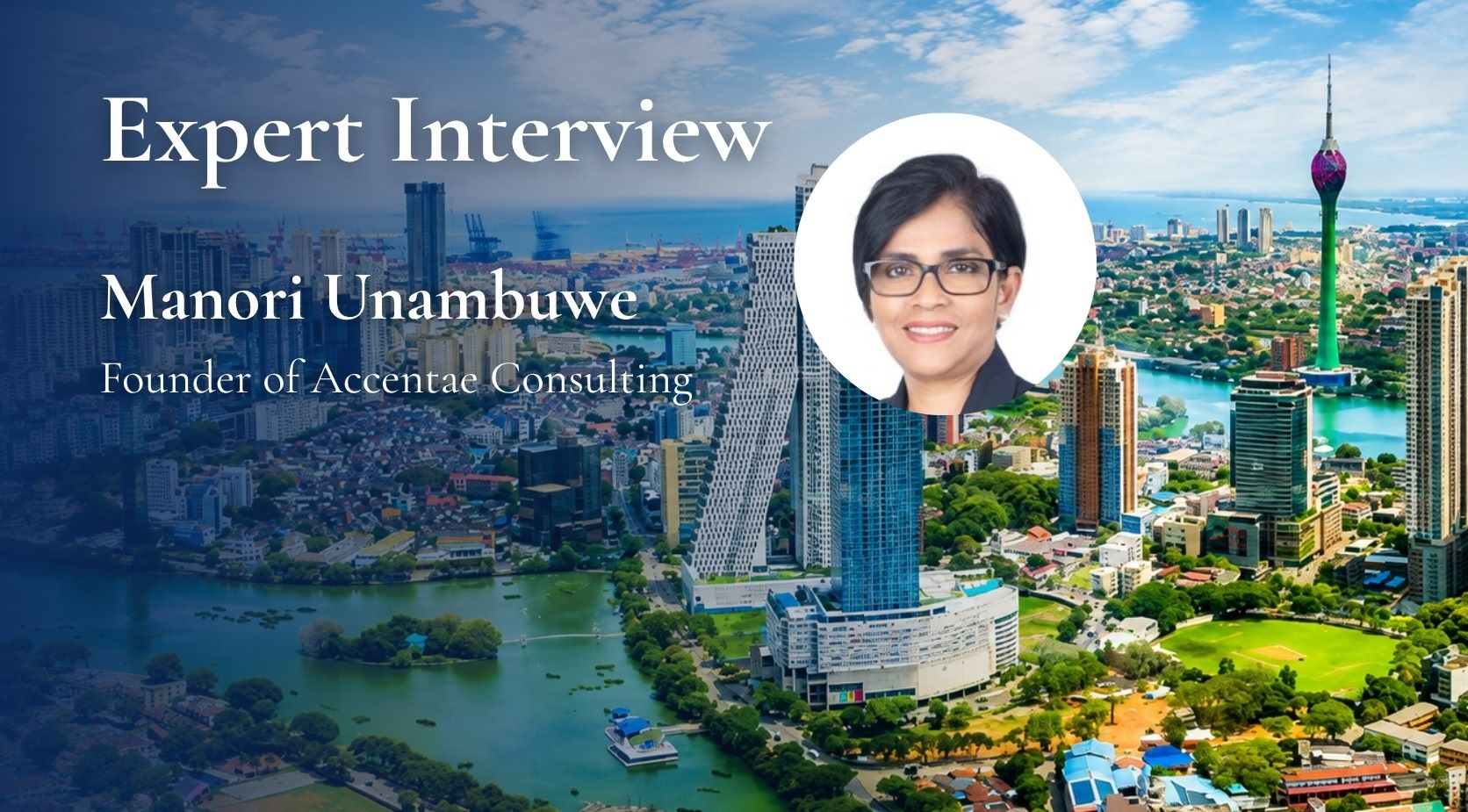
In this NeoMarketWays Expert Interview, Manori Unambuwe, Founder of Accentae Consulting, explains why European companies should take a fresh look at Sri Lanka and why its next chapter may be shaped by partnership, innovation and co-creation.
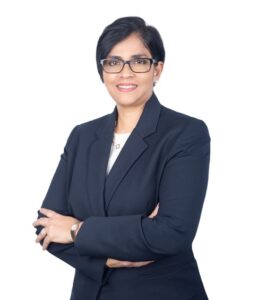
Manori Unambuwe has spent decades working at the intersection of Europe and Sri Lanka. A former Sri Lankan Ambassador to Germany and Switzerland, she brings extensive experience across business, diplomacy and international market development. Today, she serves as an AsiaBerlin Ambassador, Board Member of the European Chamber of Commerce of Sri Lanka, and ESMEA President for Sri Lanka.
For many European business leaders, Sri Lanka is still associated with the economic crisis of 2022. How do you see Sri Lanka today as a business destination?
Sri Lanka experienced a series of severe shocks in close succession, the Easter Sunday attacks in 2019, the global pandemic from 2020, and ultimately the economic crisis of 2022. Together, they created an extraordinarily difficult period for the country, so it is understandable that many European business leaders still view Sri Lanka through the lens of those years.
But countries are not defined by their most difficult chapter. What matters is how they respond and move forward.
Over the past few years, Sri Lanka has made significant progress in restoring macroeconomic stability, rebuilding confidence and implementing important economic reforms. Recovery remains a journey rather than a destination, but the direction is positive.
What interests me, having worked across both European business and diplomatic environments, is that Sri Lanka has not been changing in isolation. Europe has been changing too. Artificial intelligence, demographic shifts, geopolitical uncertainty, skills gaps and a greater focus on business continuity are reshaping European priorities.
This creates a new context in which to look at Sri Lanka not through the lens of 2022, but through the value the country can bring to businesses today. As Europe’s needs evolve, Sri Lanka is becoming relevant in some very interesting ways.
What makes Sri Lanka an attractive destination for European companies looking to expand into Asia?
I would begin by saying that Sri Lanka should not simply be viewed as a destination. It should be considered a strategic capability within a company’s wider Asian strategy.
The country combines specialised talent, technical capability, strategic location and trusted partnerships within one relatively agile ecosystem. Its position at the crossroads of East–West shipping routes has attracted international business for centuries and remains highly relevant today.
Many European companies already have manufacturing or operational bases in Sri Lanka. What is discussed less often is why some of them have remained for decades and continued to reinvest.
European investors often speak about the skilled workforce, the commitment to high-quality and high-precision output, and the relationships they have built here. They speak about dependability. They speak about trust.
Those qualities are difficult to quantify, but they matter greatly in today’s business environment. Combined with Sri Lanka’s growing knowledge economy, they create a strong foundation for companies to move into higher-value and more specialised areas while remaining connected to regional markets. We may be a small country, but we solve challenges that are becoming increasingly important to global business.
In which industries or sectors do you see the greatest opportunities for future collaboration between Sri Lankan and European companies?
I believe the next chapter of Europe–Sri Lanka collaboration should increasingly be about developing products, technology and innovation together. Europe’s priorities are centred around innovation, industrial competitiveness, sustainability and strategic connectivity. Sri Lanka’s capabilities and ambitions are becoming increasingly aligned with those priorities. I see particularly strong potential in three areas.
First, Digital, R&D and Innovation. Sri Lanka is moving into more complex areas including enterprise technology platforms, product development, AI-enabled engineering, applied research and digital products.
The Swedish enterprise software company IFS demonstrates this evolution particularly well. Over more than three decades, Sri Lanka has developed into an important centre supporting the company’s global product development and R&D activities.
Second, Advanced Industry and Engineering. This includes electronics, mechanical and industrial engineering, embedded systems, advanced manufacturing and product design. These capabilities complement Europe’s industrial strengths and create opportunities for more specialised, higher-value collaboration.
Third, Green Infrastructure and the Ocean Economy. As Europe invests in renewable energy, sustainable logistics, maritime industries and climate solutions, Sri Lanka’s strategic location and sustainability ambitions create opportunities extending well beyond traditional trade and shipping.
The future belongs to countries that complement each other’s strengths. I believe Europe and Sri Lanka have exactly that opportunity.
Sri Lanka has a highly educated workforce and a growing digital economy. How attractive is the country for technology companies, software development and innovation-driven startups?
I would move the discussion beyond BPO. That terminology reflects an earlier phase of the industry and no longer fully describes what Sri Lanka can offer.
The stronger proposition today is a knowledge and innovation economy built around product development, applied R&D, cybersecurity, AI-enabled solutions and specialised technology capabilities. Sri Lanka is particularly relevant to European mid-sized companies looking for niche, specialised teams that can work closely with their core business rather than simply provide large-volume outsourcing.
Over the past several years, Sri Lanka has also developed a vibrant startup ecosystem increasingly focused on intellectual property, products and innovation evolution. I have seen first-hand through my work with AsiaBerlin and European innovation ecosystems.
At the AsiaBerlin Summit in 2025, the Sri Lankan delegation showcased innovations ranging from MedTech and quantum computing to AgriTech and other emerging technologies. The 2026 delegation is set to include biotechnology, agentic AI and further deep-tech ventures.
International investment has added another layer of confidence. Swedish investment firm EQT invested in Sri Lankan-origin WSO2, while the London Stock Exchange Group earlier acquired Sri Lanka-based MillenniumIT for its trading technology and R&D capabilities.
Behind this is something deeper. A culture of ingenuity and problem-solving that is finding new expression through software, AI and deep technology.
Combined with reliability and long-term commitment, I believe that mindset is one of Sri Lanka’s most understated strengths as an innovation partner.
What makes Sri Lanka particularly attractive for European SMEs and family-owned businesses looking to expand internationally?
Having worked with European mid-sized and family-owned businesses across different stages of my career, I have seen how differently they often approach long-term decisions compared with large multinationals. They tend to think across generations rather than quarters. They value relationships and place considerable importance on trust, continuity and cultural compatibility.
There is a natural compatibility here. Sri Lankan business culture also places considerable value on personal relationships, commitment and continuity qualities that resonate strongly with the way many European family businesses operate.
One observation I find particularly interesting is that several European family businesses first discovered Sri Lanka while travelling here with their families. They experienced the country, connected with its people and began to recognise opportunities that would have been difficult to identify from a distance.
Countries like Sri Lanka are difficult to understand from a PowerPoint presentation. They are best understood by experiencing the country, its people, businesses, innovation and culture.
Sri Lanka has many strengths, yet it often seems to be overlooked internationally. Why do you think that is?
I do not believe Sri Lanka has a capability problem. I believe we have a visibility and positioning problem. Over many decades, we have done an excellent job of branding tourism, tea and, more recently, apparel. But the rest of Sri Lanka’s story has not been communicated with the same consistency. Our capabilities have evolved much faster than our international visibility.
There is already considerable work being done by government agencies and industry organisations to promote sectors beyond our traditional exports. The issue is not necessarily a lack of activity. It is that these efforts can remain fragmented rather than reinforcing one cohesive and memorable identity.
Having represented Sri Lanka internationally, I have seen first-hand how difficult it can be for smaller countries to command attention when larger economies and geopolitical priorities dominate the international agenda. Smaller countries therefore have to be much clearer about what they stand for and what distinctive value they bring.
Sri Lanka doesn’t need more stories. It needs to tell one story, one coherent national narrative that clearly articulates the role Sri Lanka can play in the world.
Every market has its challenges. Which legal, regulatory, tax or administrative issues should European companies consider before entering Sri Lanka?
My advice is to approach market entry strategically. Understand the regulatory environment relevant to your industry, engage experienced legal and tax advisers early, and explore the available investment frameworks before making major commitments.
Depending on the nature of an investment, approval processes can sometimes appear complex to an outsider. Efforts are underway to simplify these processes, but good local advice at the outset can save considerable time later.
The Board of Investment of Sri Lanka facilitates qualifying investments across the country, while Colombo Port City operates as a separate Special Economic Zone with a single-window investment facilitation model. Foreign ownership is permitted in many sectors, and qualifying investments may be able to access incentives or exemptions depending on their structure and scale.
Sri Lanka also has an extensive network of Double Taxation Agreements, including agreements with major European economies, together with Bilateral Investment Protection Agreements.
Companies that invest time in understanding the environment before they invest capital are usually the ones that build the strongest and most sustainable businesses.
Finding the right local partner is often critical for international expansion. What should European companies look for when selecting partners in Sri Lanka?
The right partner helps you understand the market, navigate the business environment and avoid costly mistakes. I would look beyond commercial capability alone. Integrity, transparency and a long-term approach are essential. But so is the ability to navigate the wider ecosystem and connect you with the right people, institutions and opportunities.
For companies entering Sri Lanka for the first time, the European Chamber of Commerce of Sri Lanka, European bilateral business councils and relevant industry networks can help identify credible partners and facilitate useful introductions.
Perhaps my most practical advice is to find a trusted local guide or partner early someone who understands the Sri Lankan ecosystem but also understands the European mindset, business ethics and culture.
The right partner does more than open doors. They help you understand which doors are worth opening.
Europe and Sri Lanka have maintained strong trade relations for many years. Where do you see the greatest potential for deeper cooperation?
As I mentioned earlier, the areas where I see the strongest alignment are Digital, R&D and Innovation, Advanced Industry and Engineering and Green Infrastructure and the Ocean Economy. The opportunity now is to translate that alignment into deeper forms of cooperation.
That could mean jointly developing products and intellectual property. It could involve universities, research institutions and startups collaborating on applied R&D, or European companies combining their technology and market expertise with Sri Lankan capabilities to develop solutions for Asian and international markets.
There is also scope for greater cooperation around renewable energy, sustainable manufacturing and maritime innovation.
The European Union’s Global Gateway strategy is already supporting cooperation with Sri Lanka in areas including renewable energy, the circular economy, sustainable trade and green finance, providing a broader policy context for deeper business collaboration.
What excites me is the potential for each side to bring different capabilities, perspectives and expertise to the table and together create something of greater value.
That, to me, is where the next generation of Europe–Sri Lanka cooperation holds the greatest promise.
Finally, if you could give one piece of advice to a European entrepreneur or CEO planning to expand into Sri Lanka, what would it be?
My advice would be to come with the mindset of building a partnership, not simply establishing a business. And if you are curious, come and experience Sri Lanka first-hand. Come for a holiday and stay a few extra days to meet businesses, entrepreneurs and people across the ecosystem. You may discover opportunities you would never have considered from a distance.
Throughout our conversation, we have talked about how Europe is changing, how Sri Lanka is evolving and how the strengths of both sides are becoming increasingly aligned. The greatest opportunities emerge when countries understand what makes them distinctive and build partnerships that complement each other.
For decades, global business was often organised around hierarchy one side invested while the other supplied or executed. That model created tremendous value, but I believe the future is moving towards something different. Partnerships in which both sides contribute ideas, expertise, innovation and value.
I believe the future belongs to those who co-create, not simply transact.
That is the future I see for Europe and Sri Lanka, a relationship that creates ideas, innovation and lasting value together. The next chapter is ours to build.
Thank you to Manori Unambuwe for sharing her insights and experience. Our conversation highlighted that Sri Lanka’s opportunity for European companies extends far beyond its traditional strengths in tourism, apparel and manufacturing. From digital innovation and advanced engineering to green infrastructure and the ocean economy, the country is developing new capabilities that deserve a fresh look. Her perspective also makes clear that successful market entry is ultimately about more than identifying opportunities.
- Explore how Accentae Consulting connects businesses, ideas and opportunities between Europe and Sri Lanka
- The World Is Shifting and Sri Lanka Is Sitting at the Centre of a New Business Landscape
Further Insights
Explore Opportunities in Sri Lanka
Colombo Port City: Sri Lanka’s Bet on Becoming South Asia’s Next Financial Hub.
Inside Sri Lanka’s Economy: From Global Supply Chains to Digital Growth