
Sri Lanka has spent decades building a reputation as a reliable destination for software development and technology services. Now, a new generation of entrepreneurs is attempting something more ambitious: turning the country’s technical expertise into globally competitive businesses. Recent developments in venture capital, financial technology and startup acceleration suggest that the foundations of a more independent innovation economy are beginning to take shape. But can Sri Lanka move from writing software for the world to building technology companies of its own?
There is a familiar narrative about Sri Lanka’s economy. Tea, tourism, garments and, increasingly, information technology have helped connect the island to international markets. For many European companies, Sri Lanka has also become a source of skilled software engineers, development teams and digital services. It is a relationship built on technical competence, international experience and comparatively competitive operating costs.
Yet this description captures only part of the country’s technological ambitions. Behind the established outsourcing industry, a different business culture is emerging. In Colombo, founders, investors and technology professionals are exploring business models that depend less on delivering projects for overseas clients and more on creating products, platforms and intellectual property that can be sold internationally.
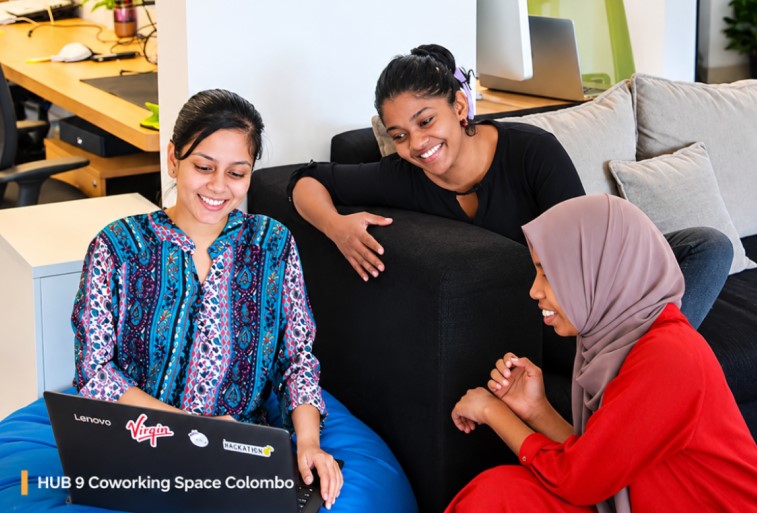
The distinction matters. A successful software services company creates employment and export revenue. A successful product company can do the same while retaining ownership of technology, building recurring revenues and developing a business that scales beyond the number of engineers it employs. Neither model is inherently superior, and both can coexist. But the balance between them can influence the long-term structure of an economy.
“The next chapter of Sri Lanka’s technology economy will not be defined simply by how much code the country produces, but by how much commercial value it can create and retain.”
A Technology Industry Ready for a Different Conversation
Sri Lanka is not starting from zero. Its technology industry has accumulated years of experience working with international clients, adapting to global standards and developing sophisticated software. The country has produced businesses that demonstrate how technical knowledge can become internationally relevant commercial products.
One of the clearest examples is WSO2, the enterprise software company founded by Sri Lankan technologist Dr Sanjiva Weerawarana. Established in 2005, WSO2 developed products in API management, software integration and identity management, competing in markets traditionally dominated by much larger international technology providers.
In August 2024, global investment organisation EQT completed its acquisition of WSO2. The transaction was significant not merely because an international investor recognised the company’s value. It demonstrated that a technology business with Sri Lankan roots could develop intellectual property, attract global customers and become part of the international enterprise software industry.
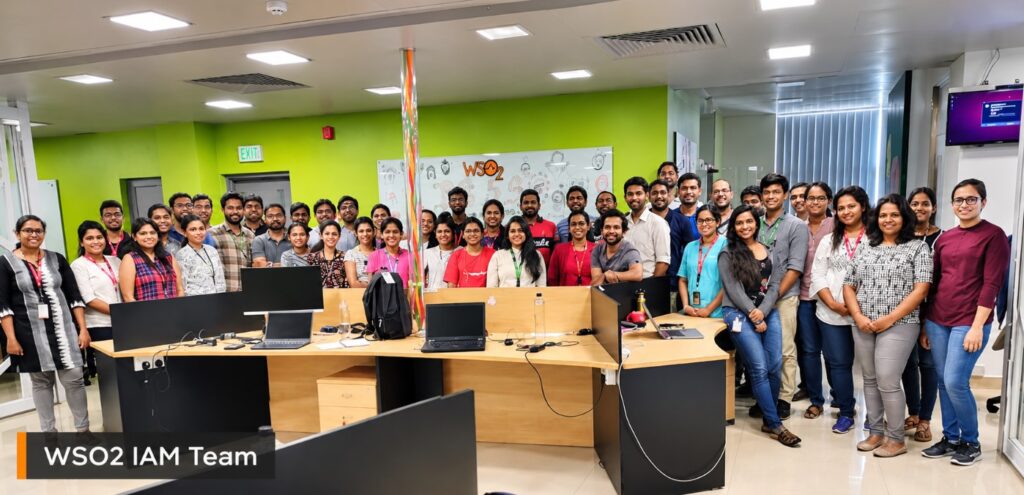
When the acquisition was announced, Weerawarana emphasised the opportunity to accelerate innovation and expand the company’s global presence. His remarks reflected an important distinction in the country’s technology story: Sri Lankan engineers do not have to remain invisible contributors to products owned elsewhere. They can also build the companies behind those products.
WSO2 is an established international software business rather than a typical early-stage startup. That makes it an especially useful reference point. It shows what is possible over a longer period, while also highlighting how much time, capital, market access and organisational discipline are required to create a globally competitive technology company.
Colombo’s Startup Ecosystem Is Becoming More Connected
One of the most interesting developments in 2026 has been the growing effort to connect founders with investors, corporate customers and regional business networks. This is an essential stage in the evolution of a startup ecosystem. Technical talent alone rarely creates successful companies. Entrepreneurs also need experienced mentors, commercial partners, financing and access to customers willing to test new solutions.
In October, First Capital Startup Nation by Hatch brought ten emerging businesses to a Demo Day at Trace Expert City in Colombo. The programme, developed by First Capital Holdings and startup incubator Hatch, connected entrepreneurs with investors, corporate representatives and industry experts.

What makes the initiative particularly interesting is its regional dimension. The programme has expanded its reach beyond Sri Lanka to include entrepreneurs from India, Nepal and Bangladesh. Three participating ventures were selected to advance to a further equity-funding stage, according to reports published after the event.
The broader message is clear. Sri Lanka’s startup sector cannot depend exclusively on domestic demand. With a relatively small home market, founders often need to think internationally from the beginning. Regional accelerator programmes can provide early exposure to different customers, business cultures and financing networks.
TRACE Sri Lanka. Connecting Technology, Talent and Entrepreneurship
Sri Lanka’s transition towards a more competitive, innovation-driven economy requires more than skilled software engineers and ambitious startups. It also depends on an environment where ideas can evolve into businesses, entrepreneurs can connect with established industries, and technology companies can build partnerships that extend beyond national borders.
A notable example is TRACE Sri Lanka, a technology and innovation hub whose name stands for Technologically Re-Awakening Culture of Excellence. By bringing together entrepreneurs, technology companies and innovators, TRACE contributes to a growing ecosystem of collaboration, knowledge exchange and technological development.
Initiatives such as TRACE reflect a broader opportunity for Sri Lanka: moving beyond traditional IT outsourcing towards an economy that develops its own technologies, products and internationally competitive companies. The challenge is not simply to produce more digital talent, but to create the conditions in which that talent can generate lasting economic value.
The Capital Question: A New Fund and an Old Challenge
Access to finance remains one of the most consequential questions for Sri Lanka’s emerging technology companies. Developing software is often less capital-intensive than building a factory, but creating an internationally competitive product still requires substantial investment. Companies need to recruit experienced teams, develop technology, meet regulatory requirements, market their products and establish operations in new countries.
In October 2026, Hatch, the Lankan Angel Network and BOV Capital announced HLAB, an investment fund with a target size of LKR 3 billion, designed to support early-stage and growth-stage businesses incorporated in Sri Lanka. First Capital Holdings committed LKR 300 million as an anchor limited partner, representing 10% of the targeted fund size.

The announcement represents an encouraging step towards a more structured investment environment. It also reflects a growing recognition that entrepreneurs need capital at different stages of development. Funding a new idea is one challenge; supporting a company as it expands into larger markets is another.
However, the distinction between an announced target and capital actually raised is important. A fund’s intended size does not automatically translate into money immediately available for investment. Its eventual impact will depend on fundraising, investment decisions, portfolio performance and the ability of supported companies to grow.
“For an emerging startup economy, the decisive question is not how many companies are founded, but how many can survive, scale and compete beyond their home market.”
Sri Lanka also faces a broader financing challenge. International venture capital tends to concentrate in markets where investors can identify experienced founders, reliable legal structures, potential exit opportunities and a sufficient pipeline of investable companies. Building that confidence requires more than one fund or accelerator. It requires an ecosystem in which investors can understand risks, founders can access professional advice and successful entrepreneurs can eventually reinvest their experience and capital.
For European investors, this creates an interesting but selective opportunity. Sri Lanka may offer access to technically capable teams and businesses operating in specialised markets. Yet investment decisions must also account for currency exposure, governance, regulatory conditions, intellectual-property protection and the practical difficulties of international expansion.
From Engineers to Entrepreneurs
Another revealing development came in October 2026, when Dialog Axiata and the Institution of Engineers, Sri Lanka launched the IESL National Startup Challenge 2026/27. The twelve-month initiative is designed to help engineering students, practising engineers and other aspiring founders turn ideas into commercially viable businesses.
The programme covers twelve innovation categories and provides a structured pathway through mentoring, prototyping, validation, product development and commercialisation. According to Dialog’s announcement, the winning team will receive LKR 1 million, while the ten finalists will receive digital startup support packages.
The initiative addresses a challenge shared by many technologically capable economies. Engineering education develops problem-solving skills, but entrepreneurship requires a different combination of abilities. Founders must understand customers, negotiate contracts, manage cash flow, recruit people and make decisions under uncertainty.
For Sri Lanka, the opportunity extends well beyond conventional software startups. Engineering-led businesses could develop solutions for industrial automation, agricultural technology, energy management, logistics, healthcare and manufacturing. These sectors offer opportunities to connect digital expertise with the practical needs of established industries.
This is also where cooperation with European companies becomes particularly relevant. A German machinery manufacturer, for example, may need specialised software, predictive maintenance capabilities or industrial data analysis. A Sri Lankan engineering team may possess the technical competence to develop such solutions but lack access to industrial customers in Europe. A well-structured partnership can bring these complementary capabilities together.
The most valuable collaborations are therefore not necessarily those that outsource another development project. They may be those that allow companies on both sides to develop products, share commercial opportunities and build lasting technological capabilities.
ABOUT THE AUTHOR
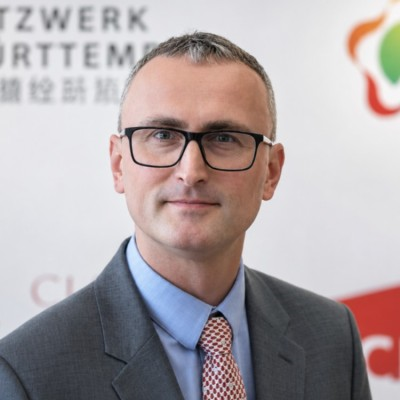
Tobias W. Loitsch
Tobias W. Loitsch is an author and international market entry specialist with a focus on consumer markets, retail distribution and cross-border business opportunities.
At NeoMarketWays, he works with manufacturers and consumer brands looking to expand into new markets across Europe and Asia, helping them identify commercial opportunities, establish local partnerships and gain access to retail and convenience store networks.
His writing explores how markets evolve, consumer behaviour changes and businesses navigate international expansion.
FinTech and the Search for a Digital Economy
Financial technology is becoming another visible part of Sri Lanka’s innovation agenda. On 2 and 3 November 2026, the Sri Lanka FinTech Festival brought together financial institutions, technology companies, investors, policymakers and entrepreneurs at Shangri-La Colombo.
The event focused on digital financial infrastructure, new business models, financial inclusion, cybersecurity and the commercialisation of fintech innovation. Its programme also addressed the ambition to build globally competitive technology businesses rather than merely adopt solutions developed elsewhere.
Deputy Minister of Digital Economy Eranga Weeraratne has identified digital payments as an important part of the country’s digital transformation. In an October 2026 interview with the Daily FT, he discussed the country’s ambition to move towards a less cash-dependent economy and strengthen its position in regional financial technology.
The commercial opportunities are substantial in principle. Digital payment systems can help smaller retailers, tourism operators and service providers participate more effectively in the formal economy. Better financial infrastructure may also support new products for small businesses, cross-border commerce and international transactions.

Yet fintech is a sector in which enthusiasm must be balanced with regulatory discipline. Consumer protection, financial stability, fraud prevention, data security and trust are fundamental. The presence of new platforms or high-profile conferences is not sufficient evidence that the market is ready to support every proposed business model.
What makes the sector worth watching is the interaction between public infrastructure and private innovation. If payment systems become more accessible and interoperable, startups may find it easier to develop services around them. The potential lies not only in digital banking but in the wider commercial activity that better financial infrastructure can enable.
Artificial Intelligence Changes the Economics of Outsourcing
Perhaps the most consequential force shaping Sri Lanka’s technology industry is not local at all. Artificial intelligence is changing the economics of software development across the world. Tasks that previously required large teams can increasingly be supported by automated coding, testing and development tools. International clients are reconsidering how they purchase technology services and which capabilities they expect external partners to provide.
For an economy with an established IT services sector, this creates both pressure and opportunity. Businesses that compete primarily on the availability of relatively inexpensive development capacity may face increasing competition. Companies that combine technical expertise with industry knowledge, product ownership and specialised solutions may find new sources of value.

The transition will not happen automatically. AI tools do not eliminate the need for engineering expertise, nor do they guarantee that every software services business can become a successful product company. Building commercial technology requires customer research, product management, distribution, branding and a willingness to invest before revenues become predictable.
Nevertheless, the direction of change deserves attention. The competitive advantage of a technology location may increasingly depend on the problems its companies can solve, rather than simply the number of programmers available for hire.
Europe and Sri Lanka: Beyond the Traditional Client Relationship
European businesses have good reasons to examine Sri Lanka’s technology sector more closely. Companies across Europe are looking for digital capabilities, engineering partners and access to new markets. At the same time, Sri Lankan entrepreneurs need customers, international networks and practical experience in navigating unfamiliar commercial environments.
These interests can complement each other, particularly in business-to-business software, industrial technology, financial services, logistics and sustainability-related applications. But productive partnerships require a more sophisticated approach than treating Sri Lanka solely as a lower-cost alternative to established technology centres.
A European company entering a partnership with a Sri Lankan startup should consider whether it is purchasing a service, co-developing a product, investing in a business or establishing a long-term commercial relationship. These are different models, with different implications for ownership, revenue sharing, intellectual property and market access.
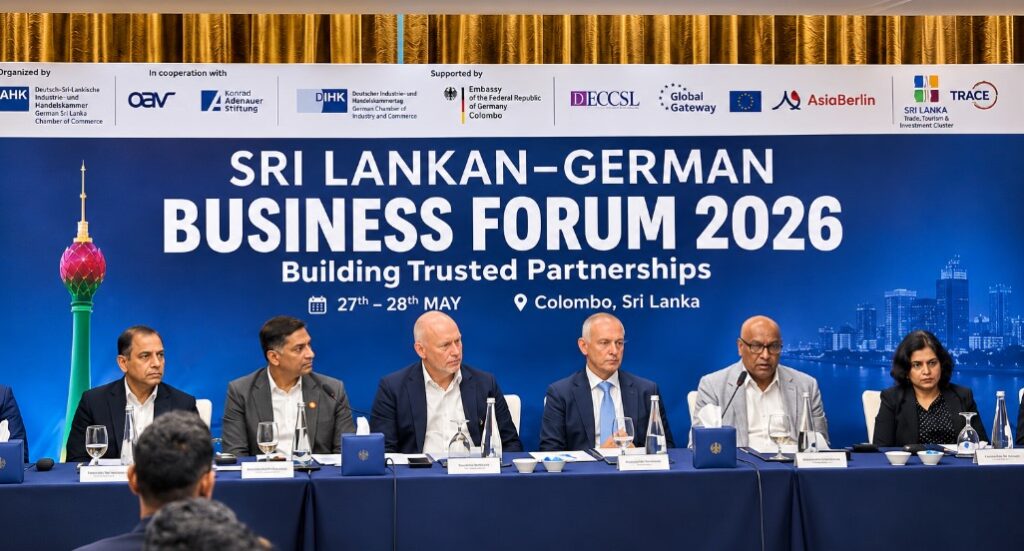
Equally, Sri Lankan founders need to understand the expectations of European customers. Technical competence is only one part of the relationship. Procurement procedures, data protection, contractual reliability, industry standards and after-sales support can determine whether a promising solution becomes a sustainable business.
As explored in Sri Lanka’s Next Chapter, the country’s economic prospects should be considered in the context of broader international partnerships rather than viewed exclusively through the lens of its recent economic difficulties. Technology entrepreneurship is one area in which that shift in perspective may prove especially valuable.
For European investors and business development professionals, the practical approach is to look beyond startup rankings and promotional events. Meeting founders, understanding their customers and assessing their ability to deliver commercially are more useful than relying on broad claims about an emerging innovation hub.
The Challenges Behind the Optimism
Despite the encouraging developments, Sri Lanka’s startup economy faces structural limitations. Domestic purchasing power is constrained, access to growth capital remains uneven and international expansion can be expensive. The wider economic environment, including currency stability and regulatory predictability, also affects investment decisions.
Another challenge is the retention of experienced professionals. Sri Lanka has developed internationally employable technical talent, but the ability to attract and retain skilled people depends on competitive career opportunities, economic confidence and the prospect of building successful businesses at home.

There is also a cultural challenge. An economy accustomed to delivering services for overseas clients must develop greater experience in marketing its own products, accepting commercial risk and competing for international customers. This requires changes not only among founders but also among investors, universities, corporations and public institutions.
The recent increase in startup programmes and financing initiatives is therefore best understood as evidence of a developing ecosystem, not proof that its transformation is complete. The next few years will reveal whether these initiatives produce companies with durable revenues, international customers and the ability to attract follow-on investment.
A Small Country with a Global Opportunity
Sri Lanka’s size is often discussed as an economic limitation. For technology entrepreneurship, however, a relatively small domestic market can also encourage founders to think internationally at an early stage. Businesses developing specialised software or digital products do not necessarily need a large home market if they can identify customers elsewhere.
Geography provides another interesting dimension. Sri Lanka sits between major Asian markets and has longstanding commercial connections with Europe. Those relationships do not automatically create a competitive advantage, but they offer networks that entrepreneurs and international partners can develop.
The more important question is whether Sri Lanka can create an environment in which promising companies have reasons to remain connected to the country as they expand. Successful internationalisation should not require every founder to move all intellectual property, management and economic activity abroad.
A mature startup ecosystem generates more than successful individual businesses. It develops experienced managers, investors, mentors, technical specialists and entrepreneurs who go on to establish new ventures. Over time, these connections can become as important as the original companies themselves.
“Sri Lanka does not need to become another Silicon Valley. It needs to build an innovation economy that reflects its own strengths, solves real problems and connects confidently with international markets.”
For now, the country’s startup story remains one of potential rather than inevitability. The new investment initiatives, regional accelerators, engineering programmes and fintech events are encouraging. But the true measure of progress will be found in companies that turn technical ability into products customers are willing to buy, year after year, across international borders.
Sri Lanka has already demonstrated that it can write software for the world. Its next economic opportunity may lie in owning more of what that software makes possible.
ABOUT THE AUTHOR
Tobias W. Loitsch
Tobias W. Loitsch is an author and international market entry specialist with a focus on consumer markets, retail distribution and cross-border business opportunities.
At NeoMarketWays, he works with manufacturers and consumer brands looking to expand into new markets across Europe and Asia, helping them identify commercial opportunities, establish local partnerships and gain access to retail and convenience store networks.
His writing explores how markets evolve, consumer behaviour changes and businesses navigate international expansion.
Further Reading
- TRACE Sri Lanka. Technology and innovation hub dedicated to fostering entrepreneurship, digital transformation and collaboration. By connecting startups, technology companies and industry partners, TRACE aims to strengthen Sri Lanka’s innovation ecosystem and support the country’s transition towards a knowledge-driven economy.
- Hatch – Startup incubation, founder support and ecosystem development in Colombo.
- Lankan Angel Network – Angel investing and early-stage entrepreneurship.
- BOV Capital – Venture capital and technology investment.
- First Capital Startup Nation – Regional founder and investor networking programme.
- WSO2 – Enterprise software company with Sri Lankan roots and international operations.
- PickMe – Sri Lankan digital mobility and delivery platform.
- Mintpay – Sri Lankan financial technology and payment services business.
- Information and Communication Technology Agency of Sri Lanka – Digital economy and technology ecosystem initiatives.
- SLASSCOM – Industry association for Sri Lanka’s IT and business process management sector.
- Sri Lanka FinTech Festival – Financial technology, digital infrastructure and industry networking.
Further Insights
- The Changing of Sri Lanka. Growth, Reform and Global Ambitions.
- Beyond the Recovery: Why Sri Lanka’s Consumer Market Deserves a Closer Look
- Sri Lanka’s Economic Revival: New Opportunities for European Businesses
- Colombo Port City: Sri Lanka’s Bet on Becoming South Asia’s Next Financial Hub.
NeoMarketWays examines international markets, emerging business models and strategic partnerships between Europe and Asia. We welcome conversations with founders, investors, industry leaders and organisations exploring technology cooperation and market-entry opportunities in Sri Lanka.
